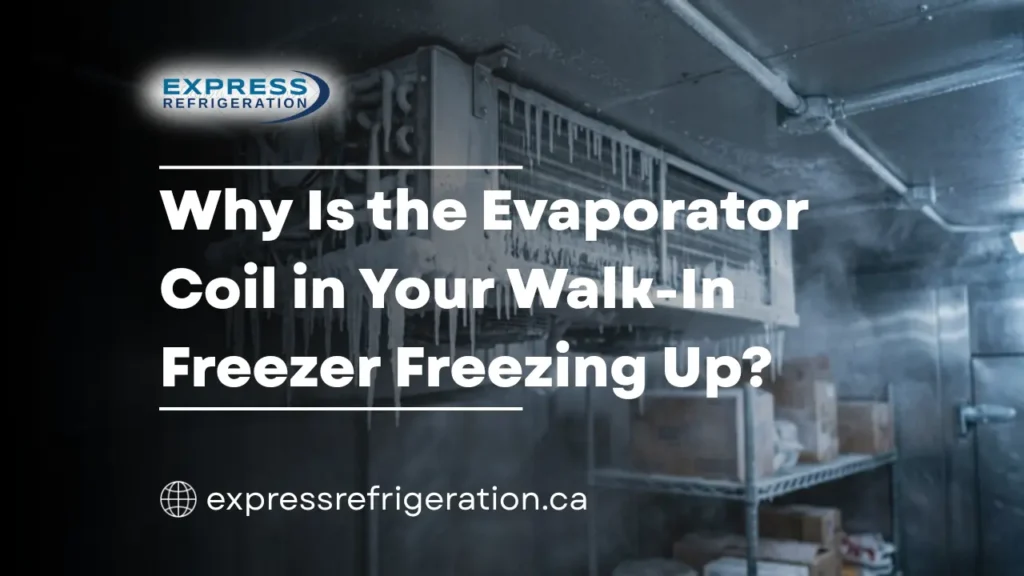
It usually starts small. A staff member opens the walk-in freezer to grab a case of product and notices the coil at the back is wearing a thick white coat of frost. Maybe there’s a puddle forming on the floor. Maybe the freezer just doesn’t feel as cold as it used to, even though the compressor sounds like it’s running non-stop. Most Calgary restaurant owners and kitchen managers have seen some version of this, and the instinct is almost always the same: chip off the ice, mop up the water, and get back to service.
That instinct is understandable, but it misses the point. A frozen evaporator coil is not the problem. It’s the symptom of a problem happening somewhere else in the system. If you don’t figure out why the coil froze in the first place, it’s going to freeze again, usually at a worse time, and usually with more inventory on the line.
This article breaks down what actually causes evaporator coil freezing in a commercial walk-in freezer, how to tell the difference between normal frost and a mechanical failure, and why melting the ice without fixing the root cause almost always leads to bigger problems down the road.
What the Evaporator Coil Actually Does
Inside every walk-in freezer, the evaporator coil is the component that pulls heat out of the air. Refrigerant flows through the coil at a very low temperature, air passes over it, and the fans push that cooled air back into the storage space. It’s a continuous cycle, and it depends on a few things working together correctly: steady airflow, a properly timed defrost cycle, clean coil surfaces, and the right refrigerant charge.
A small amount of frost on the coil during a normal operating cycle is expected. That frost is supposed to melt off during scheduled defrost periods. The issue starts when frost builds up faster than the defrost cycle can clear it, or when the defrost system isn’t working at all. Over time, that thin layer of frost turns into a solid block of ice that blocks airflow completely, and the whole system starts working against itself.
Common Causes of Evaporator Coil Freezing
Restricted Airflow Around the Coil
Airflow is the most overlooked cause of coil freezing, and it’s one of the easiest to create by accident. Boxes stacked too close to the coil, product piled against the return air vents, or shelving that blocks circulation all reduce the volume of air moving across the coil. When airflow drops, the coil surface gets colder than it should, moisture in the air freezes onto it faster than normal, and the ice builds up in a feedback loop that gets worse the longer it’s left alone.
Kitchen staff often don’t realize how sensitive these systems are to spacing. A walk-in freezer that’s packed tight during a busy week is a common trigger for icing complaints the following week.
Failed or Weak Evaporator Fan Motors
The fans are what move air across the coil and throughout the freezer. If a fan motor is failing, running slow, or has stopped completely, air stops circulating properly and cold spots develop right at the coil. Ice tends to accumulate heavily around a fan that isn’t pulling its weight, while the rest of the freezer may actually start creeping up in temperature because air isn’t reaching the product properly.
A technician can usually identify a fan issue during an inspection by checking amperage draw, listening for bearing noise, and confirming that all fans are running at the same speed. This is one of the more common repairs our technicians see on walk-in freezer service calls across Calgary.
Defrost System Problems
Every walk-in freezer relies on a defrost cycle, whether it’s timed, electric, or hot gas, to clear frost off the coil at set intervals. If the defrost timer, heater, or termination thermostat fails, that cycle either doesn’t run or doesn’t run long enough to fully clear the coil. Ice starts accumulating layer by layer with every compressor cycle, and by the time anyone notices, the coil can be encased.
This is one of the trickiest issues to diagnose without proper equipment, because the freezer can appear to be functioning normally for days before the ice buildup becomes visible or starts affecting temperature.
Dirty or Contaminated Coil Surfaces
Dust, grease, and food particles that settle on the coil surface reduce its ability to transfer heat efficiently. A dirty coil has to work harder to pull the same amount of heat out of the air, which drives coil surface temperatures lower and speeds up ice formation. This is especially common in kitchens near fryers or grills, where airborne grease finds its way into every piece of equipment in the building, including refrigeration components you wouldn’t expect.
Low Refrigerant Charge
When a system is low on refrigerant, whether from a slow leak or a service error, the coil pressure and temperature both drop below the normal operating range. A coil running colder than it should will ice up even under otherwise normal airflow conditions. Low refrigerant is a mechanical issue that requires proper diagnostic tools to confirm and repair, and it’s not something that gets fixed by clearing ice or adjusting a thermostat.
Damaged or Worn Door Seals
Every time warm, humid air enters a walk-in freezer through a gap in the door gasket, that moisture has to go somewhere. Most of it ends up freezing directly onto the coil. A door that doesn’t seal tightly, a heater strip that’s stopped working, or hinges that have shifted enough to leave a gap can all introduce a steady stream of moisture that overwhelms the defrost cycle. Calgary’s dry winters and the frequent swing into chinook conditions make gasket wear and door alignment issues more noticeable, since the temperature and humidity difference between outside and inside air becomes more extreme.
Signs and Symptoms to Watch For
Restaurant and kitchen staff are usually the first to notice something’s off, even before it becomes an obvious mechanical failure. Common signs include:
- Visible frost or ice buildup on the coil, ceiling, or walls near the coil
- Water pooling on the floor after the unit runs
- Freezer temperature climbing even though the compressor is running
- Uneven cooling, with some areas colder than others
- A hissing or dripping sound coming from the coil area
- Product near the coil developing frost or freezer burn faster than usual
Any one of these on its own might not be urgent, but a combination of two or more is usually a sign that the freezer needs a proper inspection.
Why Melting the Ice Doesn’t Fix Anything
This is the part that trips up a lot of business owners. Chipping away ice, running a hair dryer on the coil, or propping the door open to let things thaw might buy a few hours of relief, but none of those actions address why the ice formed in the first place. If the underlying cause is a failing fan motor, a bad defrost heater, or a slow refrigerant leak, the coil will ice up again, often faster the second time because the mechanical issue hasn’t been resolved and may be getting worse.
There’s also a real risk in repeatedly manual-defrosting a unit without professional diagnosis. Ice that’s chipped away with tools can damage the coil fins. Water from melting ice can find its way into electrical components. And every hour the freezer spends recovering from a manual defrost is an hour it’s not holding a safe temperature for the product inside. Professional inspections usually reveal that what looked like a simple ice problem was actually a fan motor on its way out or a door gasket that had been slowly failing for weeks.
How a Technician Diagnoses the Real Cause
A proper diagnostic visit typically involves checking the whole system, not just the coil. Technicians look at:
- Airflow patterns and whether product placement is restricting circulation
- Fan motor amperage and rotation
- Defrost timer settings and heater function
- Refrigerant pressures and charge levels
- Door gasket condition and door heater operation
- Overall system pressures compared to what’s expected for the unit type
Because several of these issues can produce nearly identical symptoms, experienced technicians often check them in a specific sequence to rule out the more common causes first before moving into more involved diagnostics like leak detection.
Prevention Tips for Calgary Walk-In Freezers
- Keep product at least a few inches away from the coil and return air vents to maintain proper airflow
- Inspect door gaskets regularly for cracks, gaps, or warping, especially heading into winter
- Schedule coil cleaning as part of routine maintenance, particularly in kitchens with heavy grease exposure
- Have defrost cycles checked annually to confirm timers and heaters are functioning correctly
- Watch for gradual temperature drift, which often shows up before visible ice does
- Book a seasonal inspection ahead of Calgary’s temperature swings, since rapid shifts between cold snaps and chinooks put extra strain on refrigeration systems
Cost Considerations
Repair costs for evaporator coil freezing depend entirely on the root cause. A fan motor replacement or defrost heater repair is generally a more contained cost, while a refrigerant leak involves leak detection, repair, and a full system recharge, which takes more time and materials. Ignoring the issue tends to be the most expensive option in the long run. Continued ice buildup puts stress on other components, increases energy use as the system works harder to compensate, and raises the risk of a full breakdown that results in spoiled inventory. A same-day diagnostic visit is almost always less costly than an emergency call after the unit has failed completely overnight.
When to Call a Professional Technician
If you’re seeing recurring ice buildup, water pooling under the unit, uneven temperatures, or a freezer that seems to be running constantly without actually holding temperature, it’s time to have it looked at. These are mechanical issues that need proper tools and experience to diagnose accurately. Waiting usually means the ice comes back faster and the eventual repair costs more, not less.
Protect Your Inventory. Call Express Refrigeration Today.
If your walk-in freezer’s evaporator coil keeps freezing up, that ice is telling you something is wrong with the system, whether it’s a failing fan, a defrost problem, a refrigerant leak, or a worn-out door seal. Melting it yourself only delays the inevitable, and every delay puts your inventory and your operation at risk.
Express Refrigeration has been trusted by Calgary restaurants, grocery stores, and commercial kitchens to diagnose and repair walk-in cooler and freezer issues quickly and correctly the first time. Our technicians don’t just clear the ice, they find out why it formed and fix the actual mechanical issue behind it, with fast response times across Calgary and surrounding communities.
If your freezer is showing signs of coil icing, don’t wait for a full breakdown. Contact Express Refrigeration today to schedule a diagnostic visit and get your walk-in freezer running the way it should.