Calgary is one of the most demanding cities in North America for commercial refrigeration equipment. Not because of any single extreme — plenty of Canadian cities get colder — but because of the relentless back-and-forth. A business owner in Edmonton deals with sustained deep cold. A restaurant in Vancouver rarely sees frost. Calgary operators get both ends of the spectrum, sometimes within 24 hours.
If you’ve ever walked into your kitchen on a January morning to find your walk-in cooler alarming or your condensing unit failing to start, Calgary’s climate is very likely the reason. This article explains what’s actually happening to your refrigeration equipment during chinooks, deep cold snaps, and the dry Alberta winters — and what you can do about it before a problem becomes an emergency.
The –30°C to +30°C Swing: Why Calgary Is Unlike Any Other Market
Most refrigeration equipment is designed to perform within a predictable temperature range. Manufacturers set operating parameters assuming that outdoor conditions change gradually over days and weeks — not dramatically over a few hours.
Calgary doesn’t cooperate with that assumption. The city regularly experiences a temperature range of 60°C or more across a single year, and the transition between extremes can be startlingly fast. That volatility puts stress on refrigeration components in ways that national service chains, working from standardized maintenance checklists built for more temperate climates, consistently underestimate.
Local technicians who work Calgary kitchens and food businesses year-round see failure patterns that simply don’t show up in training materials written for Toronto or Vancouver. Understanding what causes those failures helps you protect your equipment and your food inventory.
How Chinook Pressure Swings Damage Compressors Over Time
A chinook is a warm, dry wind that flows down the eastern slope of the Rockies and can raise Calgary temperatures by 15 to 20°C in just a few hours. For people, that’s a welcome break from winter. For a commercial refrigeration compressor, it’s a significant mechanical stress event.
Here’s what happens. When outdoor temperatures drop sharply, your condensing unit works less hard — head pressure falls and the compressor cycles less frequently. When a chinook rolls through and temperatures spike back up within hours, the system suddenly has to work much harder. Head pressure rises, the compressor ramps up its cycling frequency, and the rapid shift puts mechanical strain on components that were cold and under low load minutes earlier.
Refrigeration technicians in Calgary frequently encounter compressors with premature wear patterns that trace back to repeated chinook cycling rather than steady-state use. The damage is cumulative. Each swing by itself isn’t catastrophic, but a compressor that’s been through several Calgary winters of this treatment will show wear earlier than manufacturers’ standard estimates would predict.
There isn’t a simple fix for chinook-related cycling stress, but there are two practical responses. First, make sure your refrigerant charge is precisely correct — an overcharged or undercharged system handles pressure swings poorly and amplifies wear. Second, schedule a professional inspection after the main chinook season (typically January through March) to catch early signs of compressor fatigue before a warm spring turns into a summer breakdown.
Deep Cold and Head Pressure Failure: The January Problem
When Calgary temperatures fall below –25°C, a specific failure mode appears in commercial refrigeration systems with outdoor condensing units. It’s called refrigerant migration, and it’s one of the most common causes of walk-in coolers failing to start on bitter winter mornings.
Refrigerant migrates toward the coldest point in a system when the equipment is off or cycling slowly. In a Calgary winter, that coldest point is your outdoor condensing unit. Liquid refrigerant accumulates there overnight. When the compressor tries to start in the morning, it’s attempting to compress liquid rather than gas — something it isn’t designed to do. The result is either a compressor that struggles to start and trips on the overload, or one that starts briefly and shuts down immediately.
This is why crankcase heaters exist. A crankcase heater keeps the compressor oil warm enough to prevent refrigerant from migrating into the crankcase overnight. It’s a relatively simple component, but it’s one that many Calgary food businesses either don’t have installed on older equipment or haven’t had checked in years.
Signs Your System Is Struggling in the Cold
- The walk-in cooler fails to start on the coldest mornings but runs fine once temperatures rise
- The compressor starts with unusual noise or vibration and then trips out
- Temperature inside the unit drifts higher than usual during cold snaps
- The condensing unit makes a grinding or sluggish startup sound before settling into normal operation
If any of these sound familiar, a walk-in cooler and freezer inspection before the next cold snap is worth prioritizing.
Calgary’s Dry Air and Why Your Condenser Coils Foul Faster Than You Think
Calgary’s relative humidity is significantly lower than most Canadian cities for much of the year. That dry air carries fine particulate — dust, debris, and in commercial kitchen environments, grease vapour — that settles on condenser coils more readily than in humid climates where moisture helps particles clump and fall away.
The result is that condenser coils in Calgary commercial kitchens foul faster than the standard service interval accounts for. A coil that would stay clean enough to operate efficiently for 12 months in a Toronto restaurant may need cleaning after 6 months in a Calgary kitchen operating in the same conditions.
Fouled condenser coils reduce the system’s ability to reject heat. The compressor runs longer to achieve the same cooling, head pressure rises, and energy consumption increases. Left long enough, the strain leads to compressor failure — one of the most expensive repairs in commercial refrigeration.
The fix is straightforward: clean condenser coils more frequently than the standard annual service schedule. For high-use Calgary kitchens, twice-yearly condenser cleaning is the right interval. If your kitchen produces a lot of grease-laden air or your condensing unit is located in a dusty environment, quarterly checks are worth considering.
What Seasonal Refrigeration Prep Actually Looks Like in Calgary
Most Calgary restaurants and food businesses don’t have a seasonal refrigeration maintenance plan. They have reactive maintenance — which means they call for service when something stops working. That approach is significantly more expensive over time than scheduled inspections, particularly in a climate like Calgary’s.
Here’s what a proper pre-winter refrigeration inspection covers for a Calgary commercial kitchen:
Condenser Inspection and Cleaning Technicians remove accumulated dust and debris from condenser coils before the heating season begins. Clean coils mean the system handles cold-weather pressure changes more efficiently and doesn’t enter winter already stressed.
Crankcase Heater Verification The crankcase heater needs to be confirmed operational before deep cold arrives. A failed crankcase heater is invisible until the morning your compressor won’t start at –28°C. Checking it in October costs a fraction of an emergency service call in January.
Refrigerant Level Verification Refrigerant levels should be confirmed correct before winter. A system that’s slightly low on refrigerant will handle the pressure swings associated with chinooks and deep cold more poorly than one that’s properly charged.
Door Gasket and Seal Inspection Cold, dry Calgary air makes door gaskets brittle faster than in more temperate climates. A cracked or poorly sealing gasket forces the refrigeration system to work harder to maintain temperature — which compounds every other cold-weather stress factor.
Electrical Connection Check Thermal cycling through Calgary winters causes connections to expand and contract repeatedly. Loose electrical connections are a common finding in spring inspections that didn’t show up the previous fall.
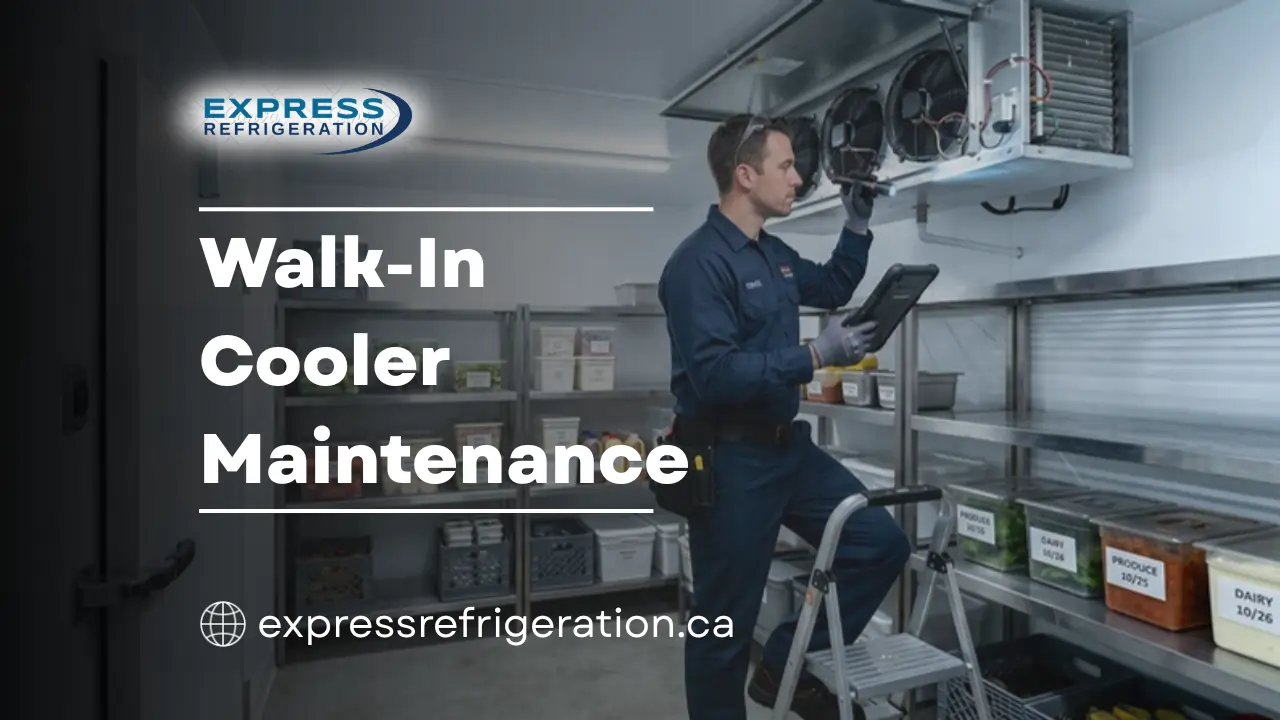
This type of structured seasonal inspection is part of broader commercial refrigeration maintenance that experienced Calgary technicians recommend as the baseline for any food business relying on refrigeration equipment year-round.
Why National Service Chains Miss Calgary-Specific Failure Patterns
A refrigeration technician trained and based in Calgary sees chinook cycling damage, cold-start refrigerant migration issues, and dry-climate coil fouling regularly enough that these patterns become second nature. A national chain dispatching a technician who primarily works in milder climates may address the immediate symptom without recognizing the underlying cause tied to local conditions.
This matters because the repair recommendation changes depending on the diagnosis. A compressor that failed due to repeated chinook cycling stress needs a different conversation about prevention than one that failed due to refrigerant contamination. Getting the right diagnosis means working with technicians who understand why Calgary equipment fails differently than equipment in other markets.
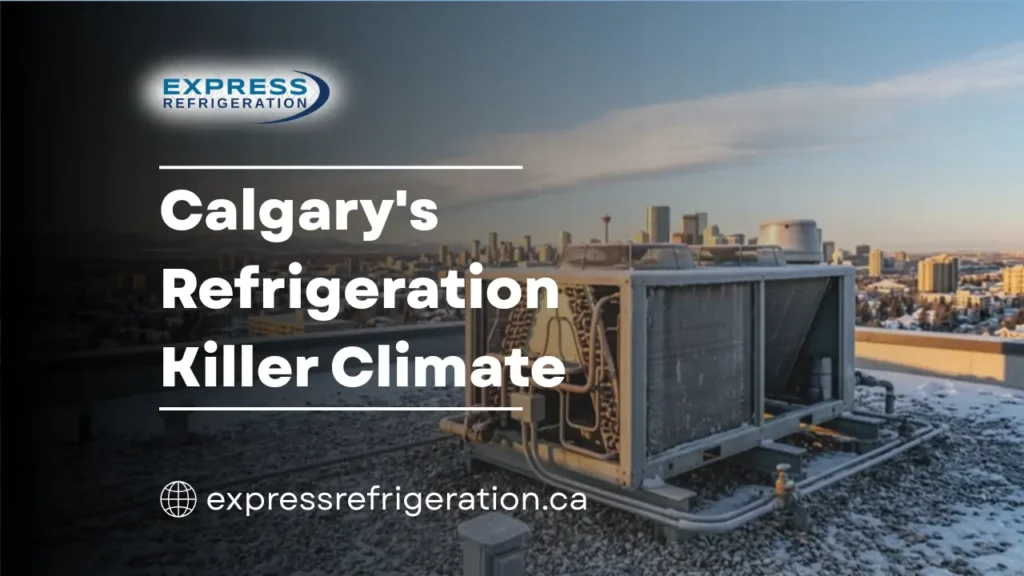
For food businesses in Calgary that also deal with HVAC alongside refrigeration, it’s worth noting that outdoor rooftop units face the same cold-weather and pressure-swing stress. If your rooftop HVAC units haven’t been inspected heading into winter, that’s a parallel concern worth addressing at the same time.
Building a Calgary-Ready Refrigeration Maintenance Calendar
A practical maintenance schedule for a Calgary food business looks like this:
Fall (September to October)
- Full condenser coil cleaning and inspection
- Crankcase heater test and replacement if needed
- Refrigerant charge verification
- Door gasket inspection and replacement where required
- Electrical connection check on all refrigeration equipment
Post-Chinook Season (March to April)
- Compressor inspection for signs of cycling wear
- Refrigerant level check after winter operation
- Condenser coil cleaning (second annual clean for high-use kitchens)
- Review of temperature logs for any anomalies during cold snaps
Ongoing
- Monthly temperature log review to catch drift before it becomes a failure
- Immediate service call if startup issues appear on cold mornings
If you’re unsure what your current equipment needs before winter, our blog on walk-in cooler service intervals covers maintenance timing in detail and helps you build a schedule that matches your equipment’s age and usage level.
Book a Seasonal Refrigeration Inspection with Express Refrigeration
Calgary’s climate is genuinely hard on commercial refrigeration equipment. The chinook swings, the deep cold, the dry air — these factors combine in ways that accelerate wear and create failure patterns that standard maintenance schedules don’t fully account for. The businesses that avoid emergency breakdowns in the middle of a Calgary winter are almost always the ones that scheduled a proper inspection before the cold hit.
The technicians at Express Refrigeration work with Calgary restaurants, food retailers, and commercial kitchens throughout the year. We understand the local failure patterns because we see them regularly, and we build maintenance recommendations around what Calgary’s climate actually demands — not what a generic service checklist suggests.
Contact Express Refrigeration today to schedule your seasonal refrigeration inspection and head into the Calgary winter with your equipment properly prepared.