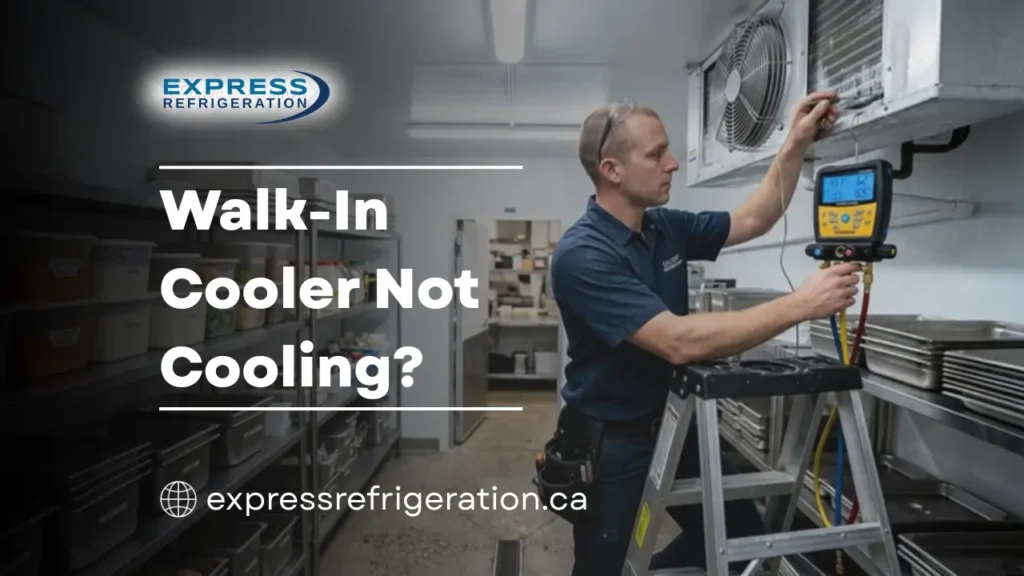
You walk into your walk-in cooler first thing in the morning and something feels off. The air isn’t cold. The product feels warmer than it should. The digital display might even show a temperature that makes your stomach drop.
If you run a restaurant, grocery store, café, or any food service operation in Calgary, this scenario isn’t just inconvenient. It’s a threat to your inventory, your health inspection standing, and your bottom line. Hundreds or even thousands of dollars in perishable stock can be at risk within hours.
The good news: not every cooling issue means a massive repair bill. Some causes are straightforward and fixable fast. Others need a licensed refrigeration technician, but even then, catching the problem early saves you money.
This guide walks you through what to check right now, the most common reasons your walk-in cooler stops cooling, and how to keep it running reliably through Calgary’s temperature swings.
First: What to Do Right Now (Safe Checks)
Before you call anyone, there are a handful of things you can safely check yourself. None of these require tools or technical training, and they occasionally solve the problem on the spot.
Safety Note
Do not open electrical panels, attempt to recharge refrigerant, or work on any sealed components. Refrigeration systems operate at high pressures and involve electrical hazards. If you’re unsure about anything, step back and call a licensed technician.
Run through these checks:
- Thermostat setpoint. Has someone accidentally bumped it? Confirm it’s set to the correct target (typically 0°C to 4°C for a cooler).
- Door seal and gasket. Close the door completely. Look for tears, cracks, or gaps in the rubber gasket. Run your hand along the edges and feel for cold air escaping.
- Is the door fully closing? Check for product, boxes, or debris preventing the door from latching shut.
- Airflow inside the cooler. Are boxes stacked directly against the evaporator coil or walls? Overloaded coolers restrict air circulation and drive temperatures up.
- Was warm product recently loaded? A large delivery of room-temperature product can raise internal temps temporarily.
- Power supply. Check that the unit is plugged in and the breaker hasn’t tripped. Sounds obvious, but it happens.
- Ice buildup on the evaporator coil. Look through the evaporator cover (if visible) for thick frost or ice. This often points to a defrost issue.
- Condenser area. If your condensing unit is accessible (often on the roof or outside the building), check that it’s not blocked by debris, snow, or nearby equipment.
If none of these solve the problem, you’re dealing with a mechanical or refrigerant issue that requires professional diagnosis. At that point, commercial refrigeration repair in Calgary is the right next step.
Most Common Causes of a Walk-In Cooler Not Cooling
In our experience servicing walk-in coolers and freezers across Calgary, these are the issues we see most often.
1. Dirty Condenser Coil
This is the single most common cause of cooling problems, and it’s almost entirely preventable.
What you’ll notice: The cooler gradually loses cooling capacity. It might still run but can’t hold temperature, especially on warmer days. The compressor may run constantly or cycle on and off frequently.
What’s happening: The condenser coil releases heat from the refrigerant. When it’s caked with dust, grease, or debris, it can’t reject heat efficiently. The whole system works harder and cools less.
What a technician does: A thorough coil cleaning, system inspection, and performance check. In most cases, this alone restores proper cooling.
2. Failed Evaporator Fan or Condenser Fan Motor
What you’ll notice: Warm spots in the cooler. Poor air circulation. You might hear the compressor running but notice little to no air moving inside the unit, or the outdoor fan isn’t spinning.
Quick check: Look through the evaporator cover. Can you see the fan blades spinning? If the cooler is running but the fan isn’t, that’s a clear sign.
What a technician does: Tests the fan motor, wiring, and capacitor. Replaces the motor if needed. This is a common wear-and-tear failure, especially in units that run year-round.
3. Iced-Up Evaporator Coil (Defrost Failure)
What you’ll notice: Heavy frost or a solid block of ice on the evaporator coil. Reduced airflow. The cooler temperature climbs steadily.
What’s happening: Walk-in coolers run periodic defrost cycles to melt frost off the evaporator. If the defrost heater, timer, or sensor fails, ice builds up until airflow is completely blocked.
What a technician does: Manually defrosts the coil, then diagnoses and repairs the defrost system component that failed. This is especially common during Calgary’s long winters when humidity and usage patterns change.
4. Refrigerant Leak or Low Charge
What you’ll notice: Gradual loss of cooling over days or weeks. The evaporator coil may show partial frosting in unusual patterns. The compressor might short-cycle.
Important: Refrigerant doesn’t “run out” on its own. If the charge is low, there’s a leak somewhere. Simply topping up refrigerant without fixing the leak is a temporary fix that wastes money and harms the environment.
What a technician does: Performs a leak detection, repairs the leak, evacuates the system, and recharges it to manufacturer specs. This is strictly a licensed-technician job. Handling refrigerant requires certification under Canadian regulations.
5. Thermostat or Temperature Sensor Failure
What you’ll notice: The display reads normally, but the actual temperature inside doesn’t match. Or the compressor never kicks on even though the cooler is warm.
What a technician does: Tests the thermostat, sensor probe, and wiring. Calibrates or replaces faulty components. Sometimes a sensor simply shifts out of position.
6. Door Gasket Leak or Door Not Sealing
What you’ll notice: Condensation around the door frame. Frost forming near the gasket. The compressor runs more than usual because warm, humid air keeps entering.
Quick check: Close the door on a piece of paper. If you can pull the paper out easily, the gasket isn’t sealing properly.
What a technician does: Replaces or adjusts the gasket, checks door hinges and alignment, and inspects the door closer mechanism.
7. Blocked Airflow, Overstocking, or Warm Product Load
What you’ll notice: Some areas of the cooler are colder than others. Product near the evaporator is fine, but items on the far side are warm.
Fix: Reorganize stock so air can circulate freely. Leave space between product and walls. Avoid loading large volumes of warm product all at once. This one doesn’t usually need a technician, but if temperatures don’t recover within a few hours, it’s worth having the system checked.
8. Compressor or Start Component Failure
What you’ll notice: The compressor hums but doesn’t start, or doesn’t run at all. You might hear clicking from the electrical box. No cooling whatsoever.
What a technician does: Tests the compressor, start relay, capacitor, and overload protector. Compressor replacement is a significant repair, but failed start components are often a quicker fix.
9. Electrical or Control Board Issues
What you’ll notice: Erratic behaviour. The unit turns on and off randomly, displays error codes, or some functions work while others don’t.
What a technician does: Diagnoses the control board, checks wiring connections, and tests individual components. Power surges are a common cause of board failures in Calgary, particularly during summer storms.
Note: Walk-in freezer not cooling? Many of the same causes apply, though freezers also have more complex defrost systems and operate at lower pressures. If your walk-in freezer is losing temperature, the diagnostic approach is similar, but the urgency is often higher given the product stored.
Quick Troubleshooting Checklist
Keep this list posted near your walk-in cooler for staff reference:
- Check thermostat setpoint (should be 0°C to 4°C for coolers)
- Confirm the door closes and latches completely
- Inspect the door gasket for tears, gaps, or stiffness
- Verify the breaker hasn’t tripped and the unit has power
- Look for ice buildup on the evaporator coil
- Check that evaporator fans are spinning
- Make sure product isn’t blocking the evaporator or air vents
- Inspect the outdoor condenser unit for debris or obstructions
- Note if a large warm delivery was recently loaded
- If nothing is obvious, call a licensed refrigeration technician
When It’s an Emergency (Call a Technician Immediately)
Some situations shouldn’t wait until morning or until “it gets worse.” Call for commercial refrigeration service right away if you notice any of the following:
- Product temperatures rising above safe holding limits (above 4°C for refrigerated food). Health code violations and food safety risk.
- Alarm conditions on the temperature controller or monitoring system.
- Burning smell coming from the electrical panel, compressor, or fan motors.
- Breaker tripping repeatedly. This points to an electrical fault that could be a fire hazard.
- Loud grinding, screeching, or banging noises from the compressor or fan motors.
- Unusual frost patterns combined with water pooling on the floor and fan noise changes.
In these cases, move perishable product to a backup cooler if you have one. Document temperatures for your food safety records. Then get a technician on-site as soon as possible.
How to Prevent This in Calgary (Simple Maintenance Habits)
Most walk-in cooler breakdowns are preventable. The following habits don’t take much time, but they dramatically reduce your risk of an unexpected failure.
Keep the Condenser Coil Clean
Schedule condenser coil cleanings at least twice a year. If your unit is in a dusty or greasy environment (like above a kitchen), quarterly is better. This single step prevents more service calls than anything else.
Train Staff on Door Discipline
Prop open the door as little as possible. Every minute the door stays open, warm humid air rushes in, forcing the system to work harder and increasing ice buildup. Make sure the door closer functions properly and the strip curtain (if installed) is intact.
Log Temperatures Daily
A simple daily temperature log helps you spot gradual changes before they become emergencies. If your cooler is normally at 2°C and you notice it creeping to 5°C over several days, that’s an early warning sign.
Schedule Preventive Maintenance
A planned maintenance visit covers everything: coil cleaning, fan motor inspection, refrigerant charge check, electrical connections, gasket condition, and defrost system testing. It costs a fraction of an emergency repair and extends the life of your equipment. Our commercial refrigeration preventive maintenance checklist for Calgary businesses covers what a proper maintenance schedule should include.
Account for Calgary’s Seasonal Swings
Calgary’s climate puts unique stress on refrigeration equipment. Summer temperatures above 30°C push condensers hard, especially rooftop units with direct sun exposure. Winter brings its own challenges: snow and ice blocking outdoor units, and extreme cold affecting refrigerant pressures. Businesses in surrounding areas like Airdrie and Chestermere face the same conditions. A seasonal check in spring and fall goes a long way toward avoiding mid-season breakdowns.
Why Work With a Local Calgary Commercial Refrigeration Team
When your walk-in cooler goes down, response time matters. Every hour the unit is offline, your product is at risk.
Working with a Calgary-based refrigeration company means shorter response times, familiarity with local building codes and health regulations, and technicians who understand what Calgary’s weather does to commercial refrigeration systems.
Express Refrigeration serves Calgary and the surrounding area with licensed technicians who work on walk-in coolers, walk-in freezers, reach-in units, and other commercial refrigeration equipment daily. We keep common parts stocked so most repairs can be completed on the first visit. We focus on honest diagnostics and practical solutions, not upselling equipment you don’t need.
Whether it’s a dirty condenser coil or a compressor that’s reached the end of its life, we’ll tell you exactly what we find and give you straightforward options.
Need Help With Your Walk-In Cooler?
If your walk-in cooler isn’t holding temperature and the basic checks above haven’t resolved the issue, it’s worth getting a technician involved before the problem gets worse. You can request a service call or maintenance quote here, or call us directly at (403) 805-0883. We serve Calgary and surrounding communities and do our best to respond quickly, because we know your inventory can’t wait.