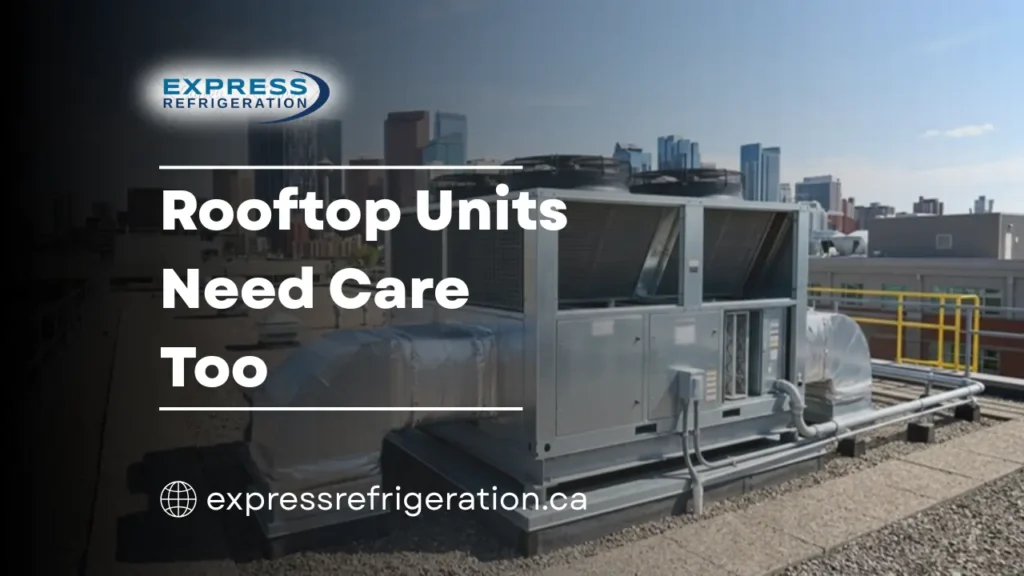
If you own or manage a commercial building in Calgary, there is a good chance your heating and cooling system lives on the roof. Rooftop units, commonly called RTUs, are the workhorses behind climate control in restaurants, retail spaces, offices, warehouses, and countless other commercial properties across the city. They handle heating, cooling, and ventilation all from a single self-contained package sitting above your building.
Most business owners rarely think about their rooftop unit until something goes wrong. The dining room gets uncomfortably warm during a lunch rush. The office feels stuffy and airless on a summer afternoon. Or the heating stops working entirely during a Calgary cold snap in January. By that point, the problem has usually been developing for a while, and the repair is more involved than it would have been with regular upkeep.
Understanding how your rooftop HVAC unit works and why routine professional maintenance is essential will help you avoid costly breakdowns, reduce energy waste, and keep your building comfortable year-round.
How Rooftop HVAC Units Work
A rooftop unit is essentially an all-in-one climate control system. Unlike split systems that have separate indoor and outdoor components connected by refrigerant lines, an RTU packages everything into a single cabinet installed on the roof. This makes them ideal for commercial buildings where interior space is valuable and multiple zones may need independent climate control.
The Core Components
Every rooftop unit contains several key components working together:
- Compressor: The heart of the cooling system. It pressurizes refrigerant and circulates it through the system to absorb and release heat.
- Condenser coil: Located on the exterior section of the unit, this coil releases heat absorbed from inside the building into the outside air.
- Evaporator coil: Positioned on the supply air side, this coil absorbs heat from the indoor air as it passes over the coil, cooling it before it is distributed through the ductwork.
- Gas heat section or heat pump: Depending on the unit configuration, heating is provided by either a gas-fired burner section or a heat pump that reverses the refrigeration cycle.
- Supply fan and blower: Moves conditioned air from the unit through the ductwork and into the building.
- Economizer: Many RTUs include an economizer section that brings in outside air for free cooling when outdoor temperatures are favorable, reducing the need for mechanical cooling.
- Filters: Intake air filters capture dust, debris, and particulate before it enters the system and the building.
How the Heating and Cooling Cycles Work
In cooling mode, the compressor circulates refrigerant between the evaporator and condenser coils. Warm indoor air is drawn through the return ductwork, passes over the cold evaporator coil, and is cooled before being pushed back into the building. The heat absorbed by the refrigerant is carried to the condenser coil on the roof, where it is released into the outdoor air.
In heating mode, a gas burner section ignites and heats a heat exchanger. The blower pushes air across the heat exchanger, warming it before distributing it through the ductwork. Units equipped with heat pumps reverse the refrigeration cycle to extract heat from the outdoor air and deliver it inside, which can be efficient in moderate temperatures but may require supplemental heat during Calgary’s coldest months.
The economizer adds another layer of efficiency. When outdoor air temperature and humidity fall within a favorable range, the economizer dampers open to bring in fresh outside air for cooling instead of running the compressor. This is particularly useful during Calgary’s spring and fall shoulder seasons when outdoor conditions are often ideal for free cooling.
Why Rooftop Units Need Regular Maintenance
RTUs are built to be durable, but they operate in one of the harshest environments any HVAC equipment can face. Sitting on a rooftop in Calgary means exposure to extreme cold, intense summer sun, wind, rain, snow, hail, and everything in between. That constant exposure takes a toll on components over time.
Beyond weather, rooftop units in commercial settings run long hours. A restaurant RTU may operate from early morning through late evening, cycling between heating and cooling depending on the season. That kind of workload accelerates wear on mechanical and electrical parts.
Without regular professional maintenance, several things start to happen.
Efficiency Drops Gradually
Dirty coils, clogged filters, and worn belts all reduce the efficiency of a rooftop unit. The system has to work harder to produce the same amount of heating or cooling, which increases energy consumption. Because the decline is gradual, many business owners do not notice it until their utility bills have crept up significantly.
A clean, well-tuned RTU operates at or near its rated efficiency. A neglected one can lose a substantial portion of its capacity, meaning you are paying more for less comfort.
Components Fail Prematurely
Parts like contactors, capacitors, fan motors, and belts all have expected service lives. Regular inspection catches these components as they start to wear, allowing for replacement during a planned service visit rather than an emergency breakdown. A failed blower motor on a Friday evening in January is a far more expensive and disruptive problem than replacing it during a scheduled maintenance appointment.
Technicians who regularly service rooftop units in Calgary know which components tend to wear first on specific unit brands and models. That experience allows them to anticipate problems before they occur.
Indoor Air Quality Suffers
RTUs are responsible for ventilation as well as temperature control. When filters are clogged, economizer dampers are stuck, or the unit is not bringing in adequate fresh air, indoor air quality declines. For restaurants, this affects both staff comfort and the dining experience. For offices and retail spaces, poor air quality can lead to complaints, reduced productivity, and even health concerns.
What Professional RTU Maintenance Includes
A thorough rooftop unit maintenance visit goes well beyond changing the filter. Experienced HVAC technicians follow a comprehensive checklist that covers every major system within the unit.
Seasonal Maintenance Checklist
- Inspect and replace air filters
- Clean condenser and evaporator coils
- Check refrigerant charge and look for leaks
- Inspect and lubricate fan motors and bearings
- Test electrical connections and tighten terminals
- Verify thermostat calibration and control board operation
- Inspect gas burner assembly, igniter, and flame sensor (for gas heat units)
- Check heat exchanger for cracks or corrosion
- Test safety controls and limit switches
- Inspect belts for wear and proper tension
- Test economizer operation and damper movement
- Clear condensate drain lines
- Inspect the unit cabinet, roof curb, and weatherproofing for damage
Each of these items, if neglected, can lead to reduced performance, higher operating costs, or outright system failure. Together, they form a maintenance program that keeps the unit running reliably season after season.
Calgary Climate Challenges for Rooftop Units
Calgary’s climate presents unique demands on rooftop HVAC equipment that business owners should understand.
Winter Stress
When temperatures drop below -20°C or colder, rooftop units with heat pumps lose efficiency and rely on auxiliary heat to keep up. Gas-fired units work hard during extended cold snaps, and components like ignitors and flame sensors can fail from repeated cycling.
Snow and ice accumulation around the unit can block airflow to the condenser coil or obstruct intake and exhaust openings. After heavy snowfalls, it is worth having someone check that the unit is clear and unobstructed.
Summer Demands
Calgary summers bring intense sun exposure on rooftops, and surface temperatures on a flat commercial roof can climb well above the ambient air temperature. This added heat makes it harder for the condenser to reject heat, which puts extra strain on the compressor. Units that have not had their condenser coils cleaned before summer are especially vulnerable to performance issues during heat waves.
Rapid Temperature Swings
Calgary is known for dramatic temperature shifts, sometimes 20 degrees or more in a single day. These swings force the RTU to transition between heating and cooling repeatedly, which increases wear on reversing valves, damper actuators, and control boards. A system that is well maintained handles these transitions smoothly. A neglected one may struggle or fail to switch modes properly.
These are some of the same factors that contribute to common commercial HVAC failures in restaurants, and they apply equally to any commercial building relying on rooftop equipment.
Signs Your Rooftop Unit Needs Attention
Between scheduled maintenance visits, watch for these indicators that something may be developing:
- Uneven temperatures throughout the building or specific zones not reaching set point
- Unusual noises coming from the roof, such as banging, squealing, or grinding
- A noticeable increase in energy costs without a clear explanation
- Frequent cycling where the unit turns on and off repeatedly in short intervals
- Odors coming through the vents, which could indicate a burned-out component or mold in the ductwork
- The unit running constantly without reaching the desired temperature
- Visible ice on refrigerant lines or coils during cooling season
Any of these signs warrants a professional inspection. Addressing them early often means a straightforward repair rather than a major component replacement.
How Often Should RTUs Be Serviced
For most commercial buildings in Calgary, rooftop units should be professionally serviced at least twice per year. The ideal schedule includes one visit in the spring to prepare for cooling season and another in the fall to prepare for heating season.
Buildings with higher demands, such as restaurants where kitchen heat and grease-laden air accelerate coil contamination, may benefit from quarterly service. The same applies to older units or systems that have a history of issues.
Between professional visits, building managers should check filters monthly and replace them as needed. Keeping the area around the rooftop unit clear of debris and ensuring drainage is unobstructed are simple steps that support overall system health.
If your building also relies on other heating and cooling equipment such as furnaces, air conditioners, or heat pumps, coordinating maintenance for all systems at once is an efficient way to keep everything in good working order.
Repair or Replace: Making the Right Decision
Well-maintained rooftop units can last 15 to 20 years. When a unit reaches the later years of its lifespan and repair frequency is increasing, it is worth evaluating whether continued repairs make financial sense or whether replacement is the better investment.
Consider replacement if:
- The unit is over 15 years old and has needed multiple major repairs in the past two years
- The compressor has failed or the heat exchanger is cracked
- The unit uses R-22 refrigerant, which is being phased out and is increasingly expensive
- Energy costs are significantly higher than what a modern high-efficiency unit would produce
- Comfort complaints persist despite repeated repairs
For units still within their expected lifespan, professional repair is almost always more cost-effective. A qualified technician can give you an honest assessment of the unit’s condition and remaining useful life so you can plan accordingly.
Keep Your Rooftop Unit Running at Its Best
Your rooftop HVAC unit works hard to keep your commercial building comfortable in every season. It deserves professional attention to make sure it can keep doing that job efficiently and reliably. Skipping maintenance might save a small amount in the short term, but it consistently leads to higher costs down the road through emergency repairs, wasted energy, and premature equipment failure.
If your rooftop unit has not been serviced recently, or if you have noticed any performance issues, now is the time to schedule a professional inspection.
The experienced technicians at Express Refrigeration provide comprehensive rooftop unit service and replacement for commercial buildings across Calgary. From seasonal tune-ups to diagnostics and repairs, their team has the knowledge and hands-on experience to keep your system performing at its best all year long.
Contact Express Refrigeration today to book your next RTU maintenance visit and protect your building’s comfort and your bottom line.