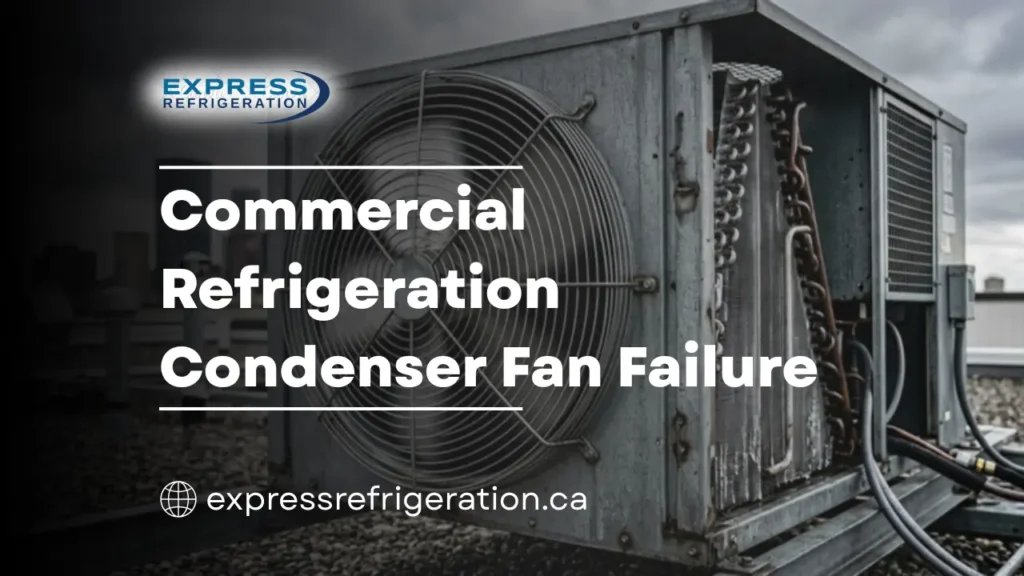
It’s a busy Friday night and the walk-in cooler at the back of the kitchen feels warmer than it should. The compressor is running, the unit doesn’t look broken, but the temperature keeps creeping up. A few hours later, staff notice the compressor cycling off on its own, then coming back on, then shutting off again. By the time anyone thinks to check the condenser unit, it’s radiating heat like a space heater and the fan blades aren’t moving at all.
This is one of the most common calls Express Refrigeration gets from restaurants and commercial kitchens across Calgary, and it almost always traces back to the same root cause: a failed or failing condenser fan. It’s a small component with an outsized job, and when it stops working, the effects ripple through the entire refrigeration system fast.
This article covers what the condenser fan actually does, why it fails, the warning signs to watch for, and what repair typically involves.
What the Condenser Fan Does and Why It Matters
The condenser fan pulls air across the condenser coil to remove the heat that refrigerant picks up as it moves through the system. Refrigerant enters the condenser as a hot, high-pressure gas, and the fan’s job is to cool it back down so it can turn into a liquid and continue the refrigeration cycle. Without that airflow, heat has nowhere to go.
This is a purely mechanical process, but it’s one the entire system depends on. Compressors, evaporator coils, and expansion valves all assume the condenser is doing its job. When the fan stops, that assumption breaks down, and every other component starts working outside its normal operating range within minutes.
How Condenser Fan Failure Causes Overheating and System Damage
Heat Has Nowhere to Go
Without airflow across the condenser coil, the hot refrigerant gas can’t release heat efficiently. The coil itself starts running hotter, and that heat has nowhere to escape except back into the refrigerant line. The result is a system that’s essentially trying to cool product with refrigerant that isn’t cooling down properly on its own.
High Head Pressure
As the condenser coil heats up, system pressure on the high side climbs well beyond normal operating range. Refrigeration systems are engineered around specific pressure limits, and sustained high head pressure puts strain on seals, valves, and connections throughout the system. It’s one of the clearest indicators a technician looks for when diagnosing a fan-related failure, since pressure readings tend to tell the story before a visual inspection even begins.
Compressor Overheating and Damage
The compressor is the most expensive component in most commercial refrigeration systems, and it’s also the one most at risk when a condenser fan fails. High head pressure forces the compressor to work harder to move refrigerant through the system, and the extra heat it generates has no way to dissipate properly. Left unresolved, this combination shortens compressor life significantly and can lead to a full compressor failure, which is a far more expensive repair than a fan motor replacement.
Poor or Inconsistent Cooling
From the front of house or the walk-in cooler’s perspective, all of this shows up as inconsistent cooling. Temperatures may hold steady for a while and then climb. Some units cycle normally in the morning and struggle by mid-afternoon once ambient kitchen temperatures rise and the system is under more load. This inconsistency is often what prompts a service call, even though the underlying cause has usually been building for days or weeks.
Common Causes of Condenser Fan Failure
Worn or Failed Fan Motor
Fan motors have a service life, and like any mechanical component, they wear out. Bearings degrade, windings break down, and motors that once ran quietly start to draw more current than they should before eventually seizing up completely.
Electrical Issues
Loose wiring, a failed capacitor, or a tripped overload can all prevent a fan motor from starting or running consistently, even if the motor itself is otherwise in good condition. This is one of the reasons DIY troubleshooting can be misleading. A fan that isn’t spinning doesn’t necessarily need to be replaced. Sometimes it’s an electrical component feeding it.
Physical Obstructions and Debris
Condenser units, especially rooftop and outdoor-mounted systems common across Calgary commercial buildings, are exposed to debris, dust, leaves, and in winter months, ice and snow. Blades can be physically blocked from turning, or debris buildup on the coil itself can reduce airflow enough to mimic fan failure symptoms even when the motor is fine.
Age and Wear Under Continuous Duty
Commercial refrigeration runs continuously, unlike residential systems that cycle far less. Fans in commercial applications are under near-constant load, and that duty cycle catches up with them. A fan motor that would last well over a decade in light use can wear out considerably faster in a commercial kitchen environment.
Warning Signs of a Failing Condenser Fan
Unusual Noises
A grinding, rattling, or squealing sound coming from the condenser unit is often the earliest warning sign. Bearings tend to announce their wear audibly before they fail completely, and catching this early usually means a straightforward repair instead of an emergency one.
Excessive Heat Around the Condenser Unit
If the area around the condenser feels significantly hotter than usual, or if a technician notes elevated discharge line temperatures during an inspection, that’s a strong indicator the fan isn’t moving enough air across the coil.
Intermittent or Inconsistent Cooling
Cooling that seems fine one hour and off the next, particularly correlating with warmer ambient temperatures or busier kitchen periods, points toward a system that’s struggling to reject heat properly.
Repeated Compressor Shutdowns
Modern compressors are protected by high-pressure safety switches that shut the unit down before catastrophic damage occurs. Repeated short-cycling or shutdowns, especially ones that seem to happen more during warmer parts of the day, are frequently tied to condenser fan problems rather than the compressor itself.
Visible Fan Blade Issues
Sometimes the sign is as simple as walking past the condenser unit and noticing the blades aren’t spinning, are spinning unevenly, or are visibly damaged or bent.
How to Diagnose Condenser Fan Failure
A proper diagnostic visit typically includes:
- Visual inspection of the fan motor, blades, and mounting
- Amperage draw testing on the fan motor
- Checking electrical connections, capacitors, and control wiring
- Measuring head pressure and comparing it to expected values for the system
- Inspecting the condenser coil for debris, dirt, or physical blockage
- Reviewing compressor cycling patterns and any recorded fault codes
Because overheating symptoms can resemble other issues like a refrigerant leak or a dirty condenser coil, experienced technicians rule out each possibility systematically rather than assuming the fan is the culprit right away.
Repair Options
Fan Motor Replacement
When the motor itself has failed or is drawing excessive current, replacement is usually the most reliable fix. Fan motors are matched to the specific condenser unit’s requirements, so using the correct replacement part matters for long-term reliability.
Capacitor or Electrical Component Repair
If the motor is intact but an electrical component is preventing it from starting or running properly, replacing that component can resolve the issue without needing a full motor swap.
Coil Cleaning and Debris Removal
In cases where airflow is restricted rather than the fan itself being at fault, a thorough coil cleaning can restore proper heat rejection and resolve overheating symptoms entirely.
Full Condenser Fan Assembly Replacement
For older units or fans with damaged blades, motor mounts, or housing, replacing the entire fan assembly is sometimes the more practical option, particularly if individual parts are difficult to source for an aging system.
Cost Considerations
A straightforward fan motor replacement is generally one of the more affordable repairs in commercial refrigeration. The cost climbs if the failure has been left unaddressed long enough to affect the compressor, since compressor replacement is a considerably larger investment. This is the core reason technicians consistently recommend addressing fan noise or overheating symptoms early. A fan repair today is almost always cheaper than a compressor repair a few weeks from now.
Prevention Tips
- Schedule regular maintenance visits that include condenser coil cleaning and fan inspection
- Keep the area around outdoor or rooftop condenser units clear of debris, leaves, and snow buildup
- Address unusual noises immediately rather than waiting for a full breakdown
- Monitor for gradual increases in cooling inconsistency, since fan wear tends to build slowly before failing outright
- Factor Calgary’s seasonal debris and winter conditions into maintenance scheduling for outdoor-mounted units
When to Call a Professional Technician
If you’re hearing unusual noises from the condenser unit, noticing the area running hotter than normal, dealing with inconsistent cooling, or seeing repeated compressor shutdowns, it’s time to have the system inspected. These symptoms rarely resolve on their own, and every day a failing fan runs undiagnosed adds more strain to the compressor.
Protect Your Compressor. Call Express Refrigeration Today.
A condenser fan failure rarely stays a small problem for long. Left unaddressed, it drives up head pressure, overworks the compressor, and can turn an affordable fan repair into a far more expensive compressor replacement. If your commercial refrigeration system is showing signs of overheating, unusual noise, or inconsistent cooling, the underlying cause needs to be diagnosed properly, not guessed at.
Express Refrigeration has helped Calgary restaurants, grocery stores, and commercial kitchens diagnose and repair commercial refrigeration issues quickly, including condenser fan failures, high pressure problems, and the compressor damage that can follow. Our technicians know what to check first, what symptoms point to what causes, and how to get your system back to normal operation without unnecessary delays.
If your equipment is showing warning signs of condenser fan failure, don’t wait for a full shutdown. Contact Express Refrigeration today to schedule a diagnostic visit and protect your compressor before a small repair turns into a major one.