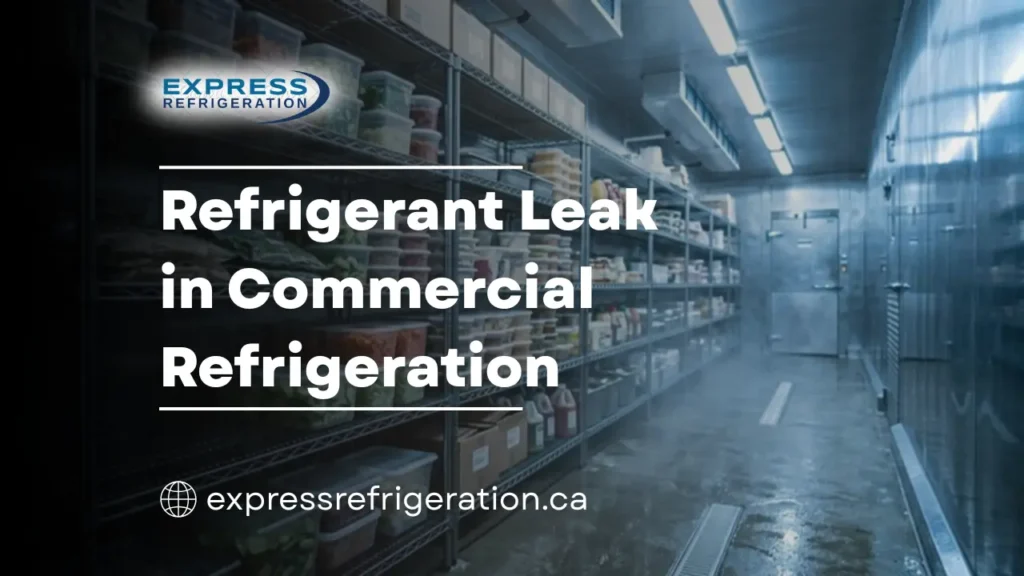
It is a Tuesday afternoon and the walk-in cooler at a busy Calgary restaurant is running almost constantly. The kitchen staff notice the temperature display creeping up by a degree or two, then back down, then up again. Nobody thinks much of it because the food still feels cold. A week later, the compressor shuts off on a high-temperature alarm and the entire walk-in is sitting at 8 degrees with a cooler full of inventory at risk.
In most cases like this, the root cause is a refrigerant leak that has been slowly developing for weeks or even months. Refrigerant leaks are one of the most common, and most misunderstood, problems in commercial refrigeration. They rarely cause a sudden total failure right away. Instead, they create a slow decline in performance that many business owners write off as normal wear and tear, until the day the system can no longer keep up.
Understanding what a refrigerant leak looks like, what it does to your equipment, and when it is time to bring in a professional can save Calgary restaurants and commercial kitchens from costly downtime, spoiled product, and expensive compressor replacements.
How Refrigerant Leaks Affect Your Refrigeration System
Refrigerant is the lifeblood of any commercial refrigeration system. It is the substance that absorbs heat from inside the walk-in cooler, freezer, or display case and releases it outside the unit. When refrigerant levels drop because of a leak, the entire cooling cycle becomes less efficient, and the effects show up in several connected ways.
Cooling Performance Declines
A system that is low on refrigerant cannot absorb heat as effectively. The compressor has to work harder and run longer to try to reach the same setpoint temperature. Many operators notice that their walk-in cooler or freezer simply cannot hold the temperature it used to, especially during busy service periods when the door is opening and closing frequently.
Food Safety Risks Increase
For any restaurant or commercial kitchen in Calgary, temperature control is not just about product quality, it is a food safety requirement. Health inspectors expect coolers to maintain safe holding temperatures consistently. A refrigeration system that is slowly losing refrigerant may still appear to be working most of the time, but it can drift into the danger zone during peak load, overnight, or on hot days. That inconsistency is exactly what creates risk for spoiled inventory and potential health code violations.
Energy Bills Climb
A compressor that runs longer to compensate for low refrigerant uses significantly more electricity. Many commercial kitchen owners do not connect a rising utility bill with a refrigeration issue, but technicians often encounter systems where a slow leak has been quietly driving up energy costs for months before anyone investigates.
Compressor Health Suffers
This is the part that concerns experienced technicians the most. Compressors are designed to operate within a specific range of refrigerant pressure and oil circulation. Low refrigerant levels can cause the compressor to run hotter than it should, reduce lubrication, and place extra mechanical stress on internal components. Left unaddressed, a refrigerant leak that seems like a minor inconvenience today can lead to a full compressor failure, which is one of the most expensive repairs in commercial refrigeration.
Common Signs of a Refrigerant Leak
Refrigerant leaks rarely announce themselves clearly. Instead, they show up as a collection of smaller symptoms that build over time. Recognizing these signs early is the key to catching the problem before it becomes a major repair.
Longer Compressor Run Times
If your walk-in cooler or reach-in unit seems to be running almost nonstop, even during slower periods, that is often one of the earliest indicators of low refrigerant. A healthy system cycles on and off in a predictable pattern. A system fighting a leak tends to run longer and rest less.
Rising Box Temperatures
A commercial fridge not holding temperature is one of the most common complaints technicians hear, and refrigerant loss is frequently part of the answer. You might notice the temperature creeping up gradually, or swinging more than usual between cycles, even though nothing else in the kitchen has changed.
Ice Buildup on the Evaporator Coil
Frost or ice forming on the evaporator coil, the indoor unit inside the walk-in cooler or freezer, is a strong sign of low refrigerant. When refrigerant pressure drops too low, the coil can get cold enough to freeze condensation directly onto its surface, which then restricts airflow and makes the cooling problem even worse.
Hissing or Bubbling Sounds Near Refrigerant Lines
A refrigerant leak under pressure can sometimes be heard before it is seen. A faint hissing sound near a line set, valve, or fitting can indicate refrigerant escaping through a small crack or loose connection.
Oily Residue Near Fittings and Connections
Refrigerant systems use oil that circulates along with the refrigerant. When a leak occurs, that oil often escapes along with the refrigerant and leaves behind a visible oily film at the leak point. Technicians performing inspections frequently look for this oily residue around valves, joints, and brazed connections as one of the clearest visual clues to a leak location.
Repeated Service Calls for the Same Issue
If a system has needed refrigerant added more than once over a relatively short period, that is a strong indication that there is an active leak somewhere in the system. A properly sealed refrigeration system does not lose refrigerant on its own.
Why Topping Up Refrigerant Is Not a Real Fix
One of the most common shortcuts in commercial refrigeration is simply adding more refrigerant when a system is running low. While this can provide temporary relief, restaurant owners frequently overlook the fact that this approach does nothing to address the underlying problem.
Refrigerant does not get used up the way fuel does. A properly functioning sealed system should maintain its refrigerant charge indefinitely. If a system is low, refrigerant has escaped somewhere, whether through a pinhole leak in a coil, a failed valve, a damaged line, or a poor connection at a fitting.
Simply recharging the system without locating and repairing the leak means:
- The refrigerant level will drop again, often within weeks
- The underlying stress on the compressor continues
- Each top-up adds cost without solving the problem
- The leak may worsen over time, leading to a larger and more expensive repair
Professional inspections usually reveal that what looks like a simple low refrigerant issue is actually a specific, identifiable leak point that can be properly repaired. Locating the leak typically involves specialized leak detection tools, pressure testing, and a careful inspection of line sets, coils, valves, and connection points. Once the leak is found and repaired, the system can be properly evacuated and recharged to the correct specification, restoring both performance and reliability.
Diagnosing a Refrigerant Leak
For Calgary business owners, the diagnostic process is something best left to experienced technicians, but understanding what is involved can help set expectations.
Visual Inspection
Technicians start by examining accessible components, including the condenser, evaporator coil, line sets, and any visible valves or fittings, looking for oily residue, corrosion, or physical damage.
Pressure Testing
By checking system pressures against the manufacturer’s specifications, technicians can determine whether refrigerant levels are low and get a sense of how the system is performing under load.
Electronic Leak Detection
Specialized leak detectors can identify even small refrigerant leaks that are not visible to the naked eye, which is especially useful for leaks inside walls, behind panels, or in hard to reach areas of a walk-in cooler.
Dye Testing
In some cases, a UV-reactive dye is added to the refrigerant system. Over time, the dye will appear at the leak location under UV light, helping technicians pinpoint exactly where the system is losing refrigerant.
Prevention Tips for Calgary Commercial Kitchens
While not every refrigerant leak can be prevented, regular maintenance significantly reduces the risk and helps catch problems early.
- Schedule routine maintenance inspections at least twice a year, ideally before the summer heat and again before winter
- Keep condenser coils clean, since restricted airflow puts extra strain on the entire system
- Avoid slamming or leaning on walk-in cooler doors, as repeated impact can damage line sets and connections over time
- Address any unusual sounds, smells, or temperature fluctuations promptly rather than waiting
- Keep a simple log of service calls so patterns, like repeated refrigerant top-ups, become easier to spot
Calgary’s climate adds another layer to consider. Commercial kitchens often run their refrigeration systems harder during summer heat waves and also face the strain of temperature swings between a heated indoor kitchen and cold outdoor condensing units in winter. Both extremes put additional stress on refrigerant lines and connections, which is part of why regular professional checks matter for equipment that runs in Alberta’s variable climate.
Cost Considerations
The cost of addressing a refrigerant leak depends on several factors, including the size of the leak, its location, the type of refrigerant used, and the accessibility of the affected component. A small leak at an easily accessible fitting is generally far less expensive to repair than a leak inside a coil or in a hard to reach line set.
What is consistent across nearly every case is this: the cost of properly diagnosing and repairing a leak early is almost always lower than the cost of a compressor failure, emergency after-hours service, or a full loss of inventory in a walk-in cooler or freezer. Addressing the walk-in cooler refrigerant leak at the first signs of trouble is consistently the more cost-effective path for Calgary business owners.
When to Call a Professional Technician
If you are noticing any combination of the signs covered in this article, it is time to bring in a technician rather than waiting to see if the problem resolves on its own. Specifically, reach out if you notice:
- Your commercial fridge not holding temperature consistently, even after adjustments
- Visible ice or frost buildup inside the unit
- Hissing sounds near refrigerant lines or the compressor area
- Oily spots near valves, fittings, or connections
- A system that has needed refrigerant added more than once
These are not issues that improve with time. A refrigerant leak that goes unaddressed tends to get worse, putting your inventory, your energy costs, and your compressor at increasing risk the longer it continues.
Get Your Refrigeration System Properly Diagnosed
If your commercial refrigeration system is showing signs of a refrigerant leak, whether that is rising temperatures, ice buildup, unusual sounds, or repeated refrigerant top-ups, delaying repairs can lead to costly downtime, spoiled product, and a much larger bill down the road.
Experienced technicians at Express Refrigeration help Calgary restaurants and commercial kitchens accurately locate and repair refrigerant leaks, not just patch the symptoms. From walk-in coolers and freezers to ice machines and full commercial refrigeration systems, our team has the tools and expertise to find the source of the problem and fix it properly the first time.
Contact Express Refrigeration today to schedule a professional inspection and keep your refrigeration equipment running reliably, efficiently, and safely.