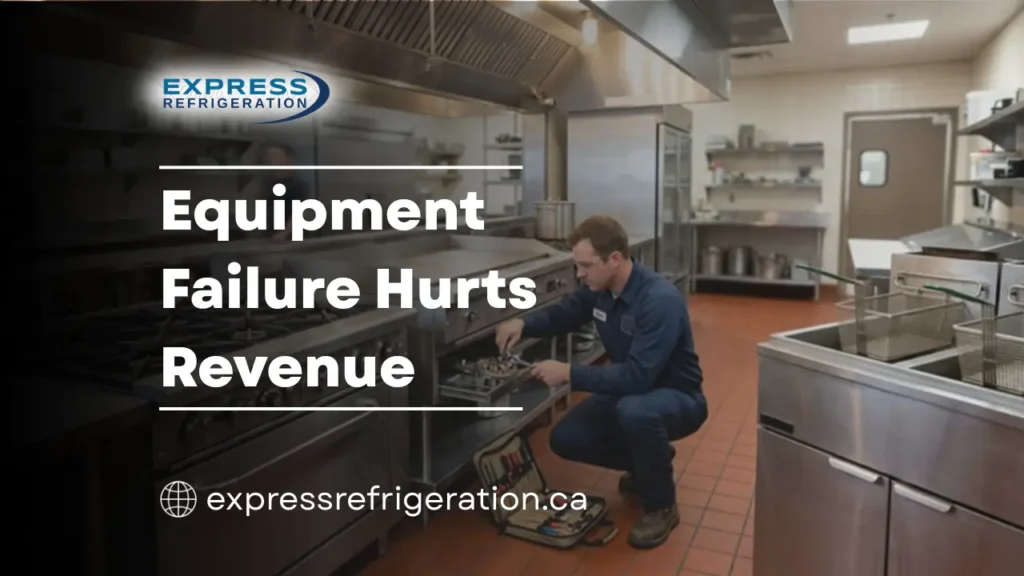
Running a busy restaurant or commercial kitchen in Calgary means your cooking equipment is working hard every single day. Ovens, ranges, fryers, and dishwashers take a beating during peak hours, and most operators push their equipment to the limit without thinking twice about scheduled maintenance.
Then one evening during a Friday dinner rush, a burner stops firing. A fryer thermostat drifts out of range. A dishwasher fails to complete its cycle. Suddenly, you are dealing with lost revenue, frustrated staff, and a dining room full of customers waiting on food that is not coming out.
The truth is, most commercial cooking equipment failures are preventable. The key is understanding how often each piece of equipment actually needs professional attention and building a realistic maintenance schedule around it.
This guide breaks down practical service timelines for the most common commercial cooking equipment found in Calgary restaurants and food service operations.
Why Scheduled Maintenance Matters More Than You Think
Commercial cooking equipment is designed for heavy daily use, but that does not mean it can run indefinitely without professional care. Grease builds up inside burner assemblies. Thermostats lose calibration over time. Gaskets wear down, door seals crack, and ignition systems degrade with constant cycling.
When maintenance gets skipped, small issues quietly stack up. A slightly miscalibrated oven starts cooking unevenly. A fryer runs hotter than it should, burning through oil faster and producing inconsistent food quality. These problems rarely announce themselves with a dramatic failure. They creep in slowly, costing you money in wasted product, higher energy bills, and shortened equipment life long before anything actually breaks down.
Restaurant owners in Calgary who invest in scheduled servicing consistently report fewer emergency repair calls, longer equipment lifespans, and more predictable operating costs throughout the year.
Commercial Oven and Range Maintenance Timeline
Ovens and ranges are the backbone of most commercial kitchens. They run for hours at a time, often at extreme temperatures, and they accumulate grease, carbon buildup, and wear faster than almost any other piece of equipment in the kitchen.
Daily Tasks (Handled by Kitchen Staff)
- Wipe down exterior surfaces and control knobs after each shift
- Clean spills from the oven floor and burner grates
- Check that all burners ignite properly and produce even flames
- Inspect door seals for visible damage or food debris
Monthly Tasks
- Deep clean burner assemblies and remove carbon deposits
- Inspect and clean pilot lights or electronic ignition components
- Check oven door hinges and gaskets for wear
- Verify that temperature settings match actual oven output using an independent thermometer
Professional Service: Every 6 Months
This is where a trained technician should step in. A professional commercial oven and range service appointment typically includes thermostat calibration, gas pressure testing, inspection of internal wiring and safety valves, and a full assessment of burner efficiency.
Experienced technicians often find issues during these visits that kitchen staff would never notice. A gas valve that is slightly underperforming, a thermostat that has drifted by 15 or 20 degrees, or a worn ignition module that is close to failing. Catching these problems early prevents the kind of mid-service breakdowns that shut down a kitchen.
For high-volume restaurants running ovens and ranges 12 or more hours a day, quarterly professional inspections are worth considering.
Commercial Fryer Maintenance Timeline
Deep fryers are among the most maintenance-sensitive pieces of equipment in any commercial kitchen. They operate at high temperatures, process large volumes of oil, and accumulate stubborn grease deposits both inside the fry pot and around burner tubes and heating elements.
Daily Tasks
- Filter or replace fryer oil based on usage and quality
- Wipe down the exterior and clean any grease from the surrounding area
- Check oil temperature accuracy against the set point
- Inspect the oil drain valve for leaks
Weekly Tasks
- Boil out the fry pot using a commercial fryer cleaning solution
- Clean burner tubes or heating elements thoroughly
- Inspect the high-limit safety switch to make sure it has not been bypassed or tampered with
Professional Service: Every 6 Months
A professional technician should inspect your commercial fryers at least twice a year. During a service visit, a technician will test thermostat accuracy, inspect gas connections and burner assemblies, check safety shutoffs, and evaluate the overall condition of the heating system.
Fryers that are not professionally maintained tend to develop thermostat drift, which leads to oil overheating. This creates a safety hazard, degrades food quality, and dramatically shortens the life of your cooking oil. If your fryer seems to be burning through oil faster than it used to, that is often the first sign that a professional inspection is overdue.
If your kitchen runs multiple fryers at high volume, scheduling professional fryer service every four months is a smart investment.
Commercial Dishwasher Maintenance Timeline
Commercial dishwashers cycle dozens or even hundreds of times per day in a busy restaurant. Wash arms clog, spray nozzles wear out, heating elements scale up, and detergent dispensers fall out of calibration. A poorly maintained dishwasher does not just fail to clean properly. It can also create health code compliance issues that put your business at risk.
Daily Tasks
- Clean wash arms and remove debris from spray nozzles
- Drain, clean, and refill the wash tank
- Wipe down door gaskets and interior surfaces
- Check detergent and rinse aid levels
Weekly Tasks
- Descale wash and rinse tanks using a commercial delimer
- Inspect the drain screen and clean thoroughly
- Check water temperature at the machine to verify it meets sanitation standards
- Examine door seals and latches for wear
Professional Service: Every 6 Months
A professional dishwasher service call covers heating element inspection, pump motor testing, water inlet valve checks, and thermostat verification. Technicians also inspect detergent and rinse aid dispensing systems to ensure proper chemical concentrations are being delivered during each cycle.
Calgary restaurants that rely on high-temperature dishwashers should pay special attention to mineral buildup. The water in Calgary and surrounding areas tends to be hard, which accelerates scale deposits on heating elements and spray nozzles. Regular professional descaling and inspection helps prevent the gradual decline in wash performance that many operators just learn to live with instead of fixing.
For operations running a dishwasher continuously through service periods, quarterly professional maintenance is a reasonable schedule.
Putting It All Together: A Practical Maintenance Calendar
Here is a simplified overview that kitchen managers and restaurant owners can use as a starting point.
Daily (Kitchen Staff)
- Surface cleaning on all equipment
- Basic operational checks (burner ignition, temperature accuracy, oil quality)
- Dishwasher tank draining and cleaning
Weekly (Kitchen Staff)
- Fryer boil-out and burner cleaning
- Dishwasher descaling and nozzle inspection
- Range and oven deep cleaning of grates and burner assemblies
Monthly (Kitchen Staff or Supervisor)
- Oven thermostat spot checks with an independent thermometer
- Door gasket inspections across all equipment
- Review of any recurring issues or performance changes
Every 6 Months (Professional Technician)
- Full inspection and calibration of ovens, ranges, fryers, and dishwashers
- Gas pressure and safety valve testing
- Electrical component inspection
- Thermostat recalibration where needed
- Identification of parts showing wear before they fail
This schedule works well for most Calgary restaurants and food service businesses. Kitchens with unusually high volume or equipment that runs extended hours should shift professional service intervals to every three or four months.
How Maintenance Reduces Long-Term Costs
There is a common mindset among busy restaurant owners that maintenance is an expense you can defer when things are running fine. In practice, the opposite is true. Preventive maintenance is one of the most reliable ways to control long-term equipment costs.
A commercial oven that receives regular professional calibration and cleaning will typically last several years longer than one that only gets attention when something breaks. The same applies to fryers, dishwashers, and every other piece of commercial kitchen equipment in your operation.
Beyond equipment life, there are energy savings to consider. A range with dirty or misaligned burners uses more gas to reach the same temperature. A fryer with a drifting thermostat burns through oil faster than necessary. A dishwasher with scaled heating elements takes longer to reach sanitizing temperatures, increasing both energy and water consumption.
These costs add up quietly over months and years. Scheduled professional servicing keeps everything running at peak efficiency, which directly affects your bottom line.
Signs Your Equipment Needs Immediate Professional Attention
Even with a solid maintenance schedule, equipment can develop problems between service intervals. Watch for these warning signs.
- Oven temperatures that fluctuate noticeably or fail to hold steady
- Burners that produce uneven, yellow, or flickering flames
- Fryers that overshoot or undershoot set temperatures
- Unusual noises from dishwasher pumps or motors
- Gas odors near any cooking equipment
- Dishwashers that fail to reach proper sanitizing temperatures
- Repeated tripping of electrical breakers connected to kitchen equipment
Any of these issues warrants a call to a qualified technician rather than a wait-and-see approach. In a commercial kitchen, small problems escalate quickly, and the cost of an emergency breakdown during service hours almost always exceeds the cost of a proactive repair call.
Climate Considerations for Calgary Kitchens
Calgary’s climate adds a layer of complexity that restaurant owners should keep in mind. During winter months, heating systems and kitchen ventilation work harder, which can affect the performance of cooking equipment that relies on consistent airflow and gas pressure. Rooftop HVAC units that supply makeup air to the kitchen can also influence cooking equipment efficiency when they are not properly maintained.
Seasonal transitions are a good time to schedule professional service for your entire kitchen lineup. Many Calgary restaurant operators find that booking a comprehensive equipment inspection in early fall and again in late spring keeps everything aligned with the demands of each season.
Keep Your Kitchen Running with Professional Maintenance
If your commercial cooking equipment has not been professionally serviced in the past six months, or if you are noticing performance issues with your ovens, ranges, fryers, or dishwashers, waiting too long to act puts your kitchen at risk for unexpected breakdowns and costly emergency repairs.
The experienced technicians at Express Refrigeration help Calgary restaurants and commercial kitchens stay ahead of equipment problems with thorough inspections, professional calibration, and reliable repair service.
Contact Express Refrigeration today to schedule a maintenance visit and keep your commercial cooking equipment performing the way it should.