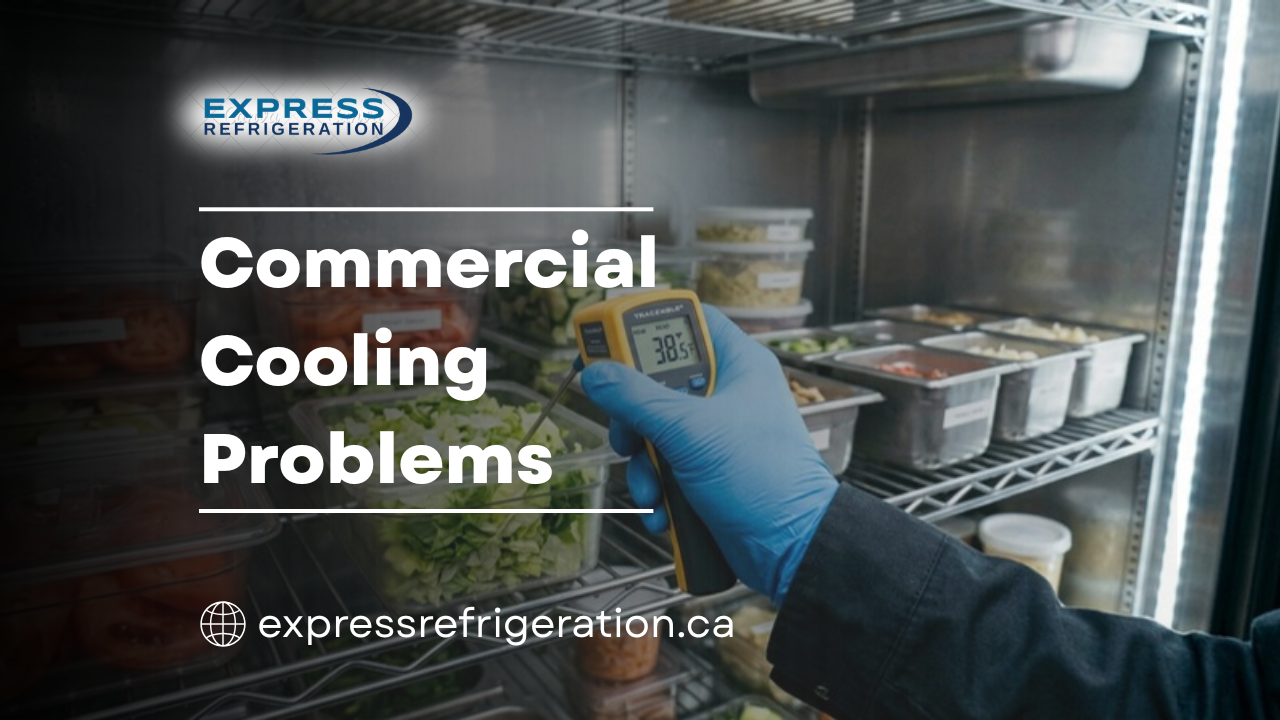
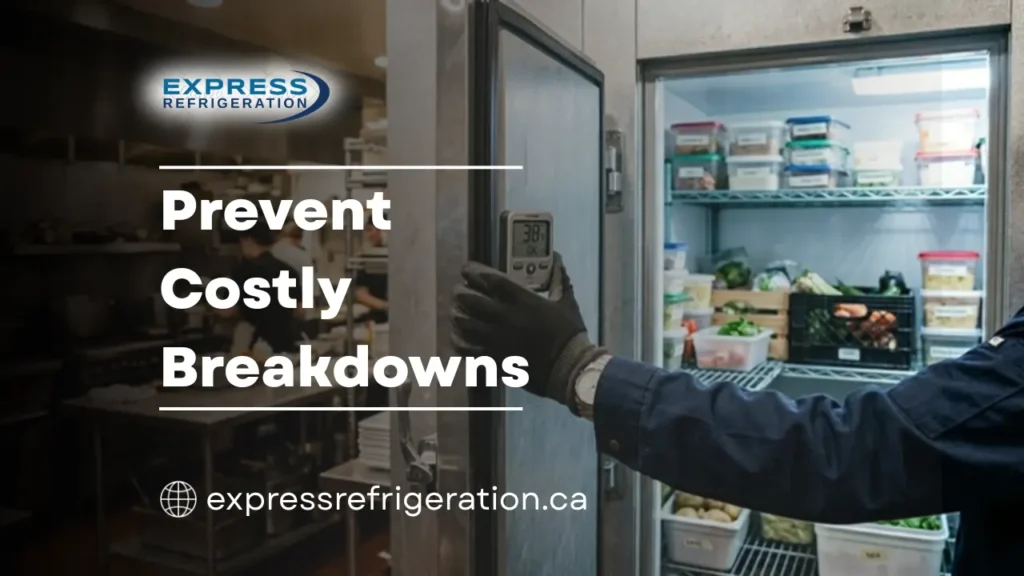
Picture this. It is a Friday evening during a busy dinner service, and your walk-in cooler stops holding temperature. By the time you notice, the interior has already climbed several degrees. Your prep cooks are scrambling to relocate product, your line is slowing down, and you are on the phone trying to find a technician who can come out on a weekend. The emergency repair bill alone is steep, but the real hit comes from the inventory you have to throw away and the revenue lost during the disruption.
This is a scenario that Calgary food business owners deal with more often than you might think. And in nearly every case, the failure could have been prevented with routine maintenance that would have cost a fraction of what the emergency ended up costing.
Preventative refrigeration maintenance is not a luxury or an upsell. For food businesses that depend on cold storage every hour of every day, it is one of the most reliable ways to control costs and avoid the kind of surprises that eat into already tight margins.
The Real Cost of Skipping Maintenance
Most food business owners understand the importance of maintaining their refrigeration equipment in theory. In practice, though, maintenance tends to slide down the priority list when things appear to be running fine. The cooler is cold. The freezer is frozen. Why spend money on something that is not broken?
The problem is that commercial refrigeration systems rarely fail without warning. They deteriorate gradually, and the signs are easy to miss if nobody is looking for them. By the time a system actually stops working, the underlying issue has usually been building for weeks or months.
Here is what deferred maintenance typically leads to:
- Emergency service calls that cost significantly more than scheduled visits, especially after hours or on weekends
- Inventory losses from temperature excursions that compromise food safety
- Health inspection issues if product is found stored outside safe temperature ranges
- Shortened equipment lifespan because worn components place stress on the entire system
- Higher energy bills from units working harder than they should to maintain temperature
When you add all of these together, the cost of skipping maintenance almost always exceeds the cost of doing it.
What Preventative Refrigeration Maintenance Actually Involves
There is a common misconception that preventative maintenance means a technician shows up, takes a quick look, and leaves. In reality, a thorough maintenance visit covers a detailed checklist of mechanical, electrical, and operational items that all affect how efficiently and reliably your equipment runs.
Condenser and Evaporator Coil Cleaning
Condenser coils release heat from the refrigeration system. When they are coated in grease, dust, or kitchen debris, heat transfer is reduced and the compressor has to run longer to achieve the same cooling effect. In a busy commercial kitchen, condensers can become severely clogged within just a few weeks.
Evaporator coils inside the cooler or freezer can also accumulate frost or ice, especially if the defrost system is not cycling correctly. Cleaning and inspecting both sets of coils is one of the most impactful parts of any maintenance visit.
Refrigerant Level and Pressure Checks
Low refrigerant is one of the most common causes of cooling problems in commercial systems. A slow leak may not cause an immediate failure, but it gradually reduces the system’s ability to hold temperature. The compressor compensates by running more frequently, which increases energy consumption and accelerates mechanical wear.
During a maintenance visit, a technician will check refrigerant pressures, look for signs of leaks, and verify that the system is operating within its designed specifications.
Electrical and Mechanical Component Inspections
Loose wiring, corroded terminals, worn contactors, and aging capacitors can all cause intermittent problems or sudden failures. Technicians inspect these components for signs of wear and address them before they lead to a breakdown.
Fan motors, both on the evaporator and condenser side, are also checked for proper operation. A failing fan motor may still spin, but if it is drawing excessive amperage or running at reduced speed, it is not doing its job effectively.
Door Gaskets, Seals, and Hinges
Worn door gaskets allow warm air to infiltrate the cooler or freezer continuously. This forces the system to work harder and can lead to frost buildup, temperature fluctuations, and higher energy costs. Checking gaskets, door closers, and hinges is a simple step that prevents a surprising amount of waste.
How Preventative Maintenance Saves Money
Lower Repair Bills Over Time
Catching a small problem during a routine inspection almost always costs less than fixing the same problem after it has caused a cascade of related failures. A worn fan motor that is identified and replaced during maintenance might cost a modest amount for the part and labor. That same fan motor, left to fail completely, can cause the evaporator coils to ice over, the compressor to overwork, and the entire system to shut down. Now you are looking at a much larger repair bill.
Experienced technicians who service commercial refrigeration systems regularly will tell you that the majority of expensive repairs they perform could have been avoided with earlier intervention.
Reduced Energy Costs
A well-maintained refrigeration system operates more efficiently. Clean coils, proper refrigerant charge, functioning fan motors, and good door seals all contribute to lower energy consumption. When any of these elements are compromised, the system compensates by running harder and longer, which shows up directly on your electricity bill.
For Calgary food businesses running multiple coolers, freezers, and prep tables, even a modest improvement in efficiency across all units adds up to meaningful savings over the course of a year.
Extended Equipment Lifespan
Commercial refrigeration equipment is a major capital investment. A quality walk-in cooler or freezer should last 15 to 20 years with proper care. Without maintenance, that lifespan can be cut dramatically. Compressors burn out prematurely, coils corrode, and electrical components fail years before they should.
Replacing a walk-in system or a bank of reach-in coolers is a significant expense. Regular maintenance protects that investment and delays the need for costly replacements.
Fewer Inventory Losses
For restaurants, bakeries, catering companies, and other food businesses in Calgary, the value of product sitting in cold storage at any given time can be substantial. A single temperature failure can result in thousands of dollars of spoiled food that has to be discarded.
Preventative maintenance dramatically reduces the likelihood of an unexpected temperature excursion. It is one of the most straightforward ways to protect your inventory.
How Often Should Food Businesses Schedule Maintenance
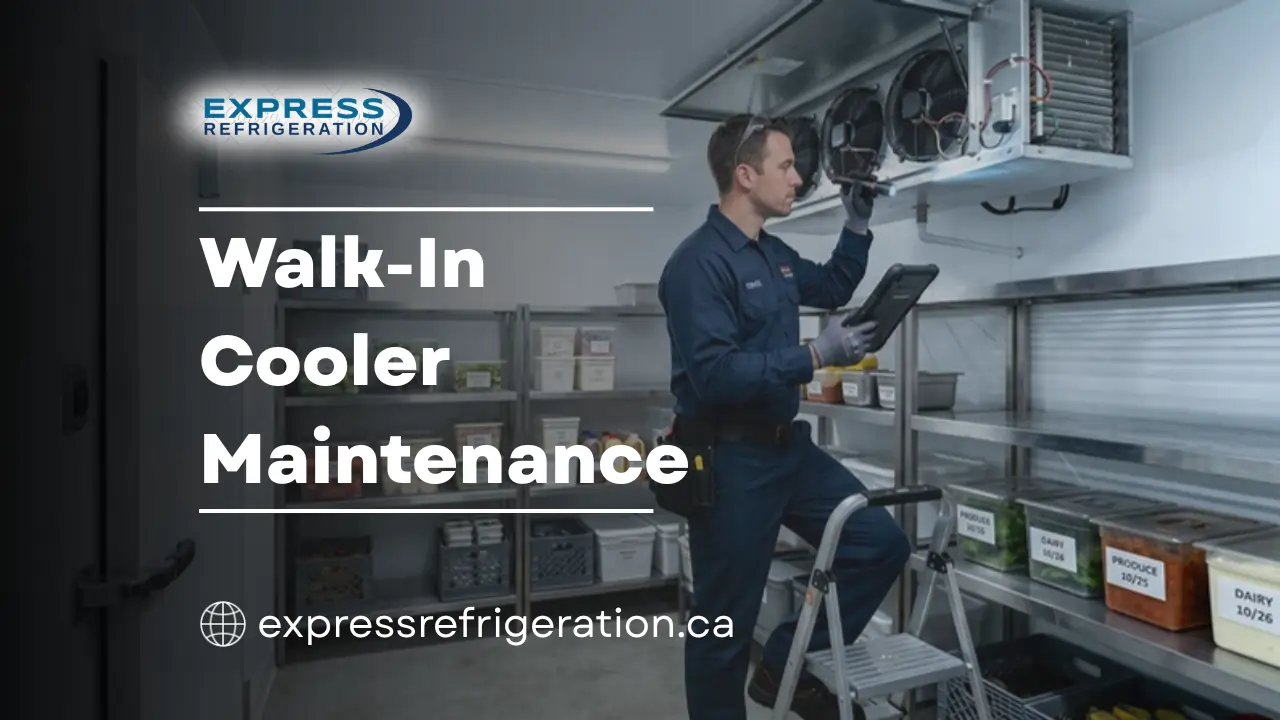
The right maintenance frequency depends on the type of equipment, its age, and how heavily it is used. As a general guideline, most commercial refrigeration systems benefit from professional service at least twice per year. High-volume operations or older equipment may need quarterly visits.
Between professional service calls, there are tasks that kitchen staff can handle to keep things running smoothly:
- Wipe down door gaskets weekly to remove food debris and buildup
- Visually inspect condenser coils monthly and note any heavy soiling
- Monitor temperature logs daily for any unusual fluctuations
- Keep clearance around condensers and ventilation openings
- Report unusual noises or frost patterns immediately
For a more detailed breakdown of maintenance intervals specific to walk-in units, this guide on how often restaurants should service their walk-in cooler is a helpful resource.
Common Issues Caught During Routine Inspections
Professional technicians who service food businesses in Calgary regularly encounter the same set of developing problems during maintenance visits. These are issues that would almost certainly lead to failures if left unaddressed:
- Slow refrigerant leaks that have reduced system charge by 10 to 20 percent
- Condenser coils caked with grease and lint, reducing heat rejection capacity
- Defrost heaters that have burned out, causing progressive ice buildup on evaporator coils
- Fan motors drawing high amperage, indicating bearing wear and impending failure
- Thermostat drift, where the controller reads a different temperature than what is actually inside the box
- Loose electrical connections generating heat and creating a fire risk
- Drain line blockages causing water to back up inside the unit
Every one of these issues is easier and cheaper to fix during a planned visit than during an emergency call after the system has gone down. Many of these are also among the most common refrigeration failures restaurants face, which reinforces why proactive service matters so much.
Why Reactive Repairs Always Cost More
Some business owners operate on a “fix it when it breaks” philosophy. While that approach might work for certain types of equipment, it is a costly strategy for refrigeration. Here is why.
Refrigeration failures almost never happen at a convenient time. They happen during a Friday dinner rush, on a long weekend, or overnight when nobody is there to notice until the morning. After-hours and emergency service calls carry premium rates, and rightly so. The technician is responding urgently and outside normal working hours.
Beyond the repair itself, there is the cost of disruption. Staff are pulled away from their regular duties to manage the crisis. Service may be affected if key menu items are unavailable. And if product loss is significant, it takes time and cash flow to restock.
Reactive repairs also tend to be more complex. A component that has been failing slowly often damages other parts of the system before it gives out entirely. What could have been a single part replacement during a maintenance visit turns into a multi-component repair.
Protecting Your Business With Professional Service
Preventative maintenance is not about spending money on something that might go wrong. It is about protecting the investment you have already made in your equipment, your inventory, and your business operations. For food businesses in Calgary, where refrigeration is critical every single day, the financial case for regular professional service is clear.
The key is working with a service provider who understands commercial refrigeration inside and out, someone who knows what to look for, what to prioritize, and how to keep your specific equipment running at its best.
Keep Your Refrigeration Running and Your Costs Down
If it has been a while since your commercial refrigeration equipment was professionally serviced, or if you have noticed rising energy bills, inconsistent temperatures, or unusual sounds from your coolers and freezers, now is the time to act. Small problems become expensive problems when they are ignored.
The experienced technicians at Express Refrigeration work with Calgary restaurants, bakeries, catering operations, and food service businesses to deliver thorough preventative maintenance that keeps equipment reliable and operating costs under control. From walk-in coolers and freezers to reach-in units and prep tables, their team knows what it takes to prevent breakdowns before they happen.
Contact Express Refrigeration today to set up a maintenance plan and start protecting your bottom line.