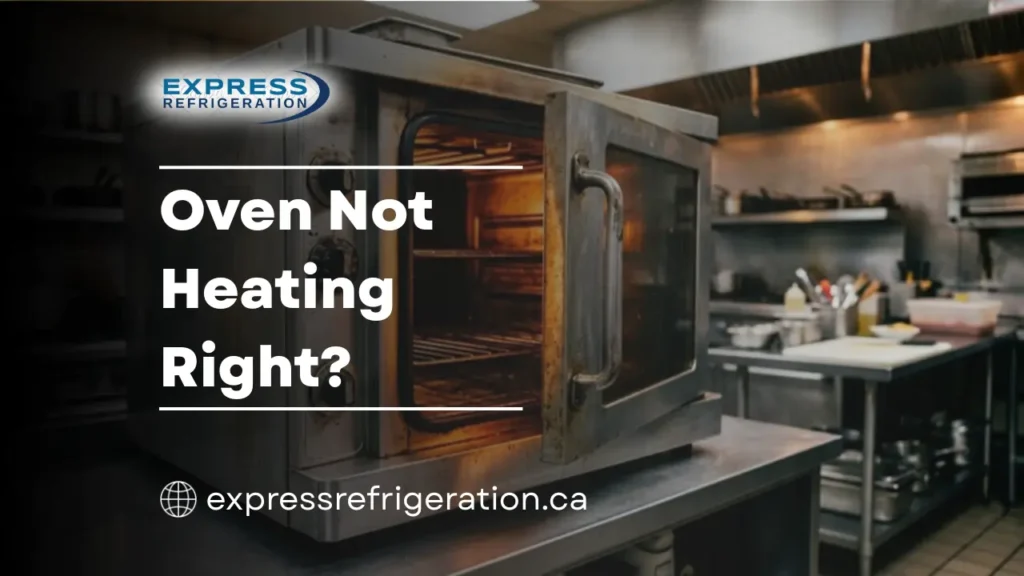
You have a full dining room, tickets lining up on the rail, and your kitchen crew is moving at full speed. Then someone calls it out: the oven is not heating properly. Dishes are coming out undercooked, cook times are dragging, and your line is falling behind. For restaurant owners in Calgary, this scenario is more than an inconvenience. It directly affects food quality, customer satisfaction, and revenue.
A commercial oven is one of the hardest working pieces of equipment in any kitchen. It runs for hours on end, handles extreme temperatures, and takes a beating day after day. When it stops heating the way it should, the root cause is not always obvious. Sometimes the fix is straightforward. Other times, the issue points to a deeper mechanical or electrical problem that requires professional attention.
This guide walks you through the most common reasons a commercial oven fails to heat properly, how to identify what is going on, and when it makes sense to call in an experienced technician for commercial oven and range repair.
Common Causes of a Commercial Oven Not Heating Properly
There is no single reason an oven loses its ability to hold or reach the right temperature. Commercial kitchens deal with a wide range of oven types, including convection ovens, deck ovens, combination ovens, and conveyor ovens. Each has its own set of components that can wear out or fail. That said, several causes come up repeatedly across all types.
Faulty Igniter (Gas Ovens)
In gas-powered commercial ovens, the igniter is responsible for lighting the burner. Over time, igniters weaken and lose the ability to open the gas valve or produce enough heat to ignite the gas. When this happens, the oven either takes far too long to preheat or never reaches the set temperature at all.
A weak igniter is one of the most common issues technicians encounter in restaurant kitchens. The oven may still turn on and appear to function, but the heat output is noticeably lower than normal.
Broken or Worn Heating Element (Electric Ovens)
Electric commercial ovens rely on heating elements to generate heat. These elements can crack, burn out, or develop hot spots over time. If the bake element at the bottom of the oven fails, the oven will struggle to maintain temperature. If the broil element at the top fails, you may notice uneven cooking or poor browning.
Visually inspecting the elements can sometimes reveal the problem. Look for visible breaks, blistering, or areas that do not glow red when the oven is on.
Thermostat Malfunction
The thermostat controls the oven’s temperature by signaling the heating source to turn on or off. When a thermostat starts to drift or fails entirely, the oven may overshoot, undershoot, or cycle inconsistently. Restaurant owners often notice this when dishes that normally cook in a set amount of time suddenly come out underdone or overdone.
Calibrating a thermostat is something a qualified technician can do during a routine service visit. However, if the thermostat is faulty beyond calibration, it will need to be replaced.
Temperature Sensor Issues
Many modern commercial ovens use a temperature sensor (also called a temperature probe) to monitor internal heat. If the sensor gives inaccurate readings, the oven’s control board receives bad data and adjusts heating incorrectly.
A sensor that has shifted out of position, corroded, or failed electrically will cause inconsistent temperatures. This is a common issue in busy Calgary restaurants where ovens run continuously through long service hours.
Gas Supply Problems
For gas ovens, the problem may not be the oven itself. A partially closed gas valve, a kinked supply line, or low gas pressure can all limit the amount of fuel reaching the burner. This results in weak flame output and poor heating performance.
If multiple gas appliances in the kitchen are underperforming at the same time, the issue likely involves the gas supply rather than individual equipment failures.
Blocked or Damaged Convection Fan
Convection ovens rely on a fan to circulate hot air evenly throughout the cavity. If that fan motor burns out, the fan blade becomes damaged, or debris blocks airflow, the oven will heat unevenly. You may notice that food on one side of the oven cooks faster than the other, or that the oven takes significantly longer to reach temperature.
Control Board Failure
The control board is the brain of a commercial oven. It manages temperature regulation, timing, and safety functions. Electrical surges, moisture damage, or simple wear and tear can cause the board to malfunction. When this happens, the oven may display error codes, behave erratically, or refuse to heat at all.
Control board issues are more common in newer, digitally controlled ovens and typically require a professional diagnosis.
Signs Your Commercial Oven Needs Attention
Not every oven problem announces itself with a complete breakdown. In many cases, the warning signs build gradually. Catching them early can prevent a full equipment failure during peak service.
Watch for these indicators:
- The oven takes noticeably longer to preheat than it used to
- Food is consistently undercooked even at the correct temperature setting
- Temperature fluctuates during a cook cycle
- The oven shuts off unexpectedly or cycles on and off rapidly
- You smell gas but the burner does not ignite
- Strange noises come from the fan motor or burner assembly
- Error codes appear on the digital display
- Certain areas of the oven cook unevenly
Restaurant owners frequently overlook gradual changes in oven performance because the kitchen adjusts around them. Cooks start compensating by increasing temperature or extending cook times. While that keeps things moving short term, it often masks a problem that is getting worse.
Basic Troubleshooting Steps for Restaurant Owners
Before calling for a repair, there are a few things you can check yourself. These steps will not fix every issue, but they can help rule out simple causes and give your technician useful information when they arrive.
Check the Power and Gas Supply
Make sure the oven is receiving power. For electric ovens, check the breaker panel. For gas ovens, confirm that the gas valve is fully open and that other gas appliances are working normally.
Inspect the Igniter or Heating Elements
If your oven is gas, listen for the clicking sound of the igniter when you turn the oven on. If there is no click or the burner does not light within a reasonable time, the igniter may be failing.
For electric ovens, visually inspect the heating elements while the oven is on. A functioning element should glow evenly. Dark spots or visible breaks indicate a failed element.
Verify the Temperature Setting
It sounds simple, but it is worth confirming. In a busy kitchen, dials get bumped and digital settings get changed accidentally. Verify that the oven is set to the correct temperature and mode.
Clean the Oven Interior
Built-up grease, carbon, and food debris can affect airflow, sensor accuracy, and even burner performance. A thorough cleaning can sometimes resolve minor heating inconsistencies. Regular cleaning also extends the life of your commercial kitchen equipment.
Look for Error Codes
If your oven has a digital control panel, note any error codes that appear. These codes are specific to the manufacturer and model, and they give technicians a starting point for diagnosis.
When to Call a Professional Technician
Some oven problems are safe and simple enough to investigate on your own. Others are not. Any issue involving gas leaks, electrical wiring, control boards, or internal components should be handled by a qualified technician.
Here are clear situations where professional service is the right call:
- You smell gas but the oven will not ignite
- The oven trips the electrical breaker repeatedly
- Internal components like fans, igniters, or sensors need replacement
- Temperature calibration is off and manual adjustment has not helped
- The control board displays persistent error codes
- The oven has not been professionally serviced in over a year
Experienced technicians can diagnose issues quickly using specialized tools and manufacturer knowledge. Attempting complex repairs without proper training can create safety hazards and may void your equipment warranty.
For Calgary restaurant owners, working with a local service provider means faster response times and technicians who understand the specific demands of high-volume commercial kitchens in the area.
Preventive Maintenance Tips to Avoid Oven Downtime
Routine maintenance is the most effective way to keep your commercial oven running reliably. Most major oven failures start as small issues that go unnoticed for weeks or months. A consistent maintenance schedule catches these problems early and keeps repair costs manageable.
Recommended Maintenance Practices
- Daily: Wipe down the oven interior and door seals after each shift. Remove food debris from the bottom of the cavity.
- Weekly: Inspect burner flames (gas ovens) for colour and consistency. A healthy flame should be mostly blue. Yellow or orange flames indicate a combustion issue.
- Monthly: Check door gaskets for wear or gaps. A damaged gasket lets heat escape and forces the oven to work harder.
- Quarterly: Schedule professional inspection and cleaning of internal components including fans, igniters, sensors, and gas connections.
Pairing oven maintenance with service for your other kitchen equipment, like commercial dishwashers and fryers, helps keep your entire kitchen running smoothly on a single maintenance schedule.
Cost Considerations for Commercial Oven Repairs
Repair costs vary depending on the type of oven, the specific failure, and whether parts need to be ordered. Simple fixes like replacing an igniter or heating element tend to be relatively affordable. More involved repairs like control board replacement or gas valve work will cost more.
Here is a general idea of what to expect:
- Igniter replacement: Low to moderate cost, quick turnaround
- Heating element replacement: Moderate cost, straightforward repair
- Thermostat calibration or replacement: Moderate cost
- Fan motor replacement: Moderate to higher cost depending on the model
- Control board replacement: Higher cost, may require ordering parts
Delaying repairs almost always increases the final cost. A weak igniter that is ignored can lead to incomplete combustion, carbon buildup, and additional damage to other components. Addressing problems early is always the more cost-effective approach.
Calgary Climate and Commercial Oven Performance
Calgary’s cold winters and dry air can play a role in kitchen equipment performance. Gas pressure can fluctuate during extreme cold snaps, and electrical systems in older commercial buildings may be more prone to voltage irregularities during peak heating season.
Additionally, ventilation systems in Calgary restaurants work harder during winter months, which can affect kitchen airflow and oven performance. If your oven issues seem seasonal, it is worth having a technician evaluate whether your kitchen’s heating and cooling systems are contributing to the problem.
Keep Your Kitchen Running Without Interruption
A commercial oven that does not heat properly puts your entire kitchen operation at risk. Slower ticket times, inconsistent food quality, and unexpected breakdowns during service all affect your bottom line. The good news is that most oven issues are diagnosable and repairable when caught early.
If your restaurant’s oven is underperforming, running unevenly, or failing to reach temperature, do not wait until it stops working entirely. Early diagnosis saves money and prevents the kind of downtime that disrupts service and costs you customers.
The experienced technicians at Express Refrigeration help Calgary restaurant owners diagnose and repair commercial oven problems quickly and professionally. Whether it is a faulty igniter, a failing thermostat, or a control board issue, their team has the expertise to get your kitchen back to full capacity.
Contact Express Refrigeration today to schedule a professional oven inspection and keep your equipment performing at its best.