It is the middle of a Calgary summer, your dining room is packed, the kitchen is running full tilt, and suddenly you notice the temperature inside is climbing. Your commercial AC is running, but the building feels warmer by the hour. Staff are uncomfortable, customers are shifting in their seats, and you are wondering whether you are about to lose a whole evening of business to a cooling failure.
This is one of the most common calls commercial HVAC technicians in Calgary receive during the warmer months. A commercial air conditioning system that runs but does not actually cool the space is more than an inconvenience. It affects food safety, staff productivity, customer experience, and in many cases, it violates health and safety expectations for food service businesses.
Understanding what causes this problem, and knowing what steps to take before you call a technician, can save you time, money, and unnecessary stress.
How Commercial AC Systems Differ from Residential Units
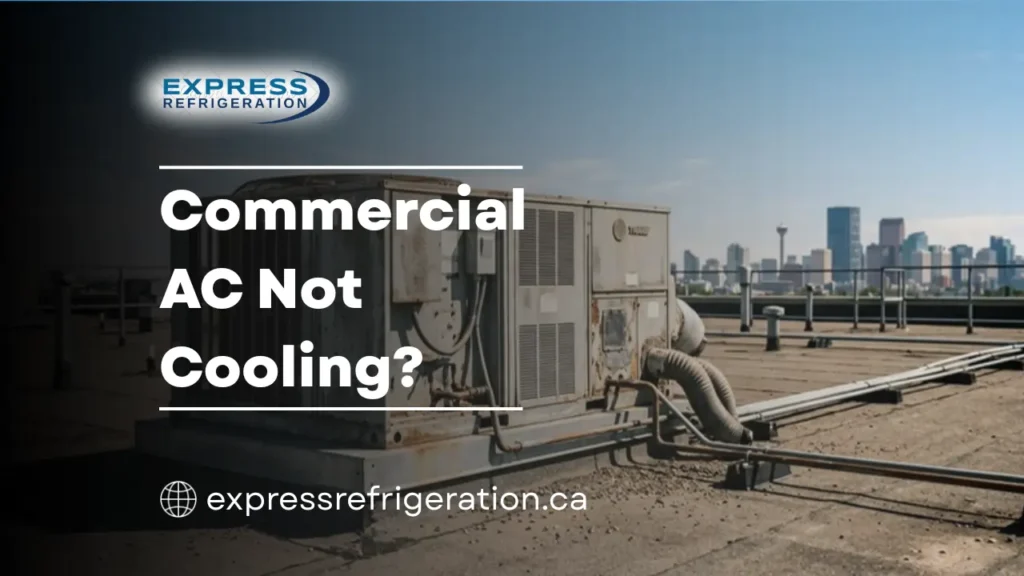
Before diving into the causes, it helps to understand that commercial air conditioning systems are fundamentally different from what you have at home. Most commercial buildings in Calgary rely on rooftop units (RTUs), split systems, or packaged HVAC systems that handle significantly larger spaces with heavier cooling loads.
Restaurants and commercial kitchens generate enormous amounts of heat from ovens, fryers, and dishwashers. That means the AC system is working harder and longer than a residential unit ever would. This increased demand accelerates wear on components and makes regular maintenance far more critical.
When something goes wrong with a commercial HVAC system, the impact is immediate and often costly.
Common Causes of a Commercial AC Not Cooling
There are several reasons your commercial AC might be running without actually bringing the temperature down. Some are straightforward. Others require a trained technician to diagnose properly.
Dirty or Clogged Air Filters
This is the single most common reason commercial AC systems underperform. When air filters become clogged with dust, grease, and debris, airflow is restricted. The system has to work harder to push air through, and the result is reduced cooling capacity.
In restaurant environments, grease buildup on filters happens faster than in other commercial settings. If filters are not cleaned or replaced on a regular schedule, cooling performance drops noticeably.
What to check:
- Pull out the air filter and inspect it visually
- Hold it up to a light source; if you cannot see light through it, it needs replacing
- In commercial kitchens, filters should be checked monthly at minimum
Refrigerant Leaks or Low Refrigerant Levels
Your AC system relies on refrigerant to absorb heat from the indoor air and release it outside. If the refrigerant level is low, the system cannot cool effectively. Low refrigerant almost always points to a leak somewhere in the system, because refrigerant does not simply “run out” over time.
Signs of a refrigerant issue include:
- The system blowing lukewarm or room-temperature air
- Ice forming on the evaporator coils or refrigerant lines
- The system running continuously without reaching the set temperature
- Hissing or bubbling sounds near the AC unit
Refrigerant handling requires a licensed HVAC technician. This is not something to attempt on your own, and topping up refrigerant without finding and repairing the leak is a temporary fix at best.
Frozen Evaporator Coils
When evaporator coils freeze, your AC essentially stops cooling. Ice on the coils blocks the heat exchange process, and the system just recirculates warm air.
Frozen coils are usually caused by:
- Restricted airflow from dirty filters or blocked vents
- Low refrigerant levels
- A failing blower motor
- Running the AC when outdoor temperatures drop below a certain threshold
If you notice ice on your coils, turn the system off and let the ice melt before calling for service. Running a frozen system can cause compressor damage, which is a far more expensive repair.
Thermostat Malfunctions
Sometimes the problem is not the AC unit itself but the thermostat controlling it. A miscalibrated thermostat, a faulty sensor, or incorrect programming can cause the system to cycle improperly or fail to engage the cooling mode altogether.
In commercial settings with multiple zones, it is also possible that one thermostat is overriding another or that the system is set to heating mode by mistake, especially after seasonal transitions in Calgary where spring weather can fluctuate dramatically.
Quick checks:
- Verify the thermostat is set to “cool” and not “heat” or “fan only”
- Make sure the set temperature is below the current room temperature
- Check that the display is functioning and responsive
- Replace batteries if applicable
Dirty Condenser Coils
The condenser unit, typically located on the rooftop or outside the building, releases the heat your system has pulled from indoors. When the condenser coils are coated in dirt, debris, or cottonwood fluff (a common issue in Calgary during June and July), the unit cannot release heat efficiently.
The result is a system that runs and runs but never brings the temperature down to where it should be. Over time, this also puts enormous strain on the compressor and can lead to premature failure.
Rooftop units are especially prone to this because they are exposed to the elements and rarely get the attention they need between service calls.
Compressor Problems
The compressor is the heart of your AC system. It circulates refrigerant and drives the entire cooling cycle. When the compressor starts to fail, you will notice a significant drop in cooling performance.
Common compressor issues include:
- Electrical failures or tripped breakers
- Overheating due to dirty coils or restricted airflow
- Internal mechanical wear from age or lack of maintenance
- Hard starting or short cycling
Compressor replacement is one of the more expensive AC repairs, so catching early warning signs through routine maintenance is always the better path.
Ductwork Leaks
In older commercial buildings in Calgary, ductwork can develop leaks at joints, seams, or connections. When cooled air escapes into ceiling cavities or wall spaces before reaching the occupied areas, the building never reaches a comfortable temperature even though the AC is working properly at the unit level.
Ductwork leaks are tricky because they are hidden. A technician can perform a pressure test or visual inspection of accessible sections to identify the problem.
What to Do First When Your Commercial AC Stops Cooling
When you realize your AC is not doing its job, there are a few steps you can take before scheduling a service call.
Step 1: Check the Thermostat
Confirm settings, mode, and temperature. This seems simple, but technicians frequently arrive at service calls only to find the thermostat was set incorrectly.
Step 2: Inspect the Air Filters
If they are dirty, replace them. This alone can restore cooling in many cases.
Step 3: Look at the Outdoor or Rooftop Unit
Check for visible obstructions, debris buildup, or anything blocking airflow around the condenser. Clear away any debris if it is safe to do so.
Step 4: Check the Breaker Panel
A tripped breaker can shut down part of the system without any obvious indication at the thermostat. Reset the breaker once. If it trips again, stop and call a technician because repeated tripping indicates an electrical issue.
Step 5: Avoid Running the System if You Suspect a Freeze-Up
If you see ice on any part of the system, shut it down. Let everything thaw before restarting, and schedule a professional inspection to find the root cause.
Why Regular Maintenance Prevents These Problems
Most of the issues listed above are preventable with scheduled maintenance. Commercial HVAC failures in restaurants almost always trace back to deferred maintenance, and the repair bill is usually far higher than the cost of a seasonal tune-up would have been.
A proper commercial AC maintenance visit typically includes:
- Cleaning or replacing air filters
- Inspecting and cleaning condenser and evaporator coils
- Checking refrigerant levels and testing for leaks
- Inspecting electrical connections and controls
- Testing thermostat calibration
- Lubricating moving parts
- Checking ductwork for obvious leaks
For Calgary businesses, scheduling maintenance in late spring before the summer heat arrives is ideal. The last thing you want is to discover your AC is not working on the hottest day of the year when every HVAC company in the city is fully booked.
Cost Considerations for Commercial AC Repairs
Repair costs vary depending on the issue. Here is a general idea of what to expect:
- Filter replacement: Minimal cost, often under $100
- Refrigerant recharge and leak repair: Moderate cost depending on the location and severity of the leak
- Thermostat replacement or recalibration: Relatively affordable
- Condenser coil cleaning: Moderate, especially for rooftop units requiring specialized access
- Compressor replacement: The most expensive common repair, often running into several thousand dollars for commercial units
- Ductwork repair: Variable depending on accessibility and extent of damage
The key takeaway is that smaller issues caught early remain affordable to fix. Ignored problems almost always escalate.
When to Call a Professional Technician
Some troubleshooting is reasonable for a business owner to handle. Checking filters, verifying thermostat settings, and clearing debris from an outdoor unit are all safe and sensible steps.
But if the system is still not cooling after those checks, it is time to bring in a professional. Specifically, call a technician if:
- The system is blowing warm air despite correct thermostat settings and clean filters
- You notice ice anywhere on the unit or refrigerant lines
- The system is making unusual sounds like grinding, clicking, or hissing
- Breakers keep tripping when the AC runs
- The system short cycles, turning on and off repeatedly without reaching temperature
- You smell burning or unusual odors when the system is running
Commercial AC systems involve high-voltage electrical components, pressurized refrigerant, and complex controls. Attempting repairs beyond basic troubleshooting without proper training risks injury and can void equipment warranties.
A qualified AC and heat pump repair technician will have the tools and diagnostic equipment to pinpoint the issue quickly and recommend the most cost-effective solution.
Keep Your Calgary Business Cool and Running
A commercial AC that is not cooling is never just a comfort issue. For restaurants and food service businesses, it affects health code compliance, food storage temperatures, and the overall customer experience. For retail and office spaces, it impacts employee productivity and can drive customers away.
The good news is that most cooling failures are caused by identifiable, repairable issues. Catching them early and maintaining your system on a regular schedule keeps your business comfortable and your repair costs manageable.
If your commercial air conditioning system is not cooling properly, waiting too long to address it can turn a simple repair into a major expense.
The experienced technicians at Express Refrigeration help Calgary businesses diagnose and resolve commercial AC problems quickly and professionally. Whether you are dealing with a rooftop unit that is underperforming or a system that has stopped cooling altogether, the team has the expertise to get your equipment back on track.
Contact Express Refrigeration today to schedule a service call and keep your business cool when it matters most.